Legendary Climbs of Europe – A Cyclist’s Definitive Guide


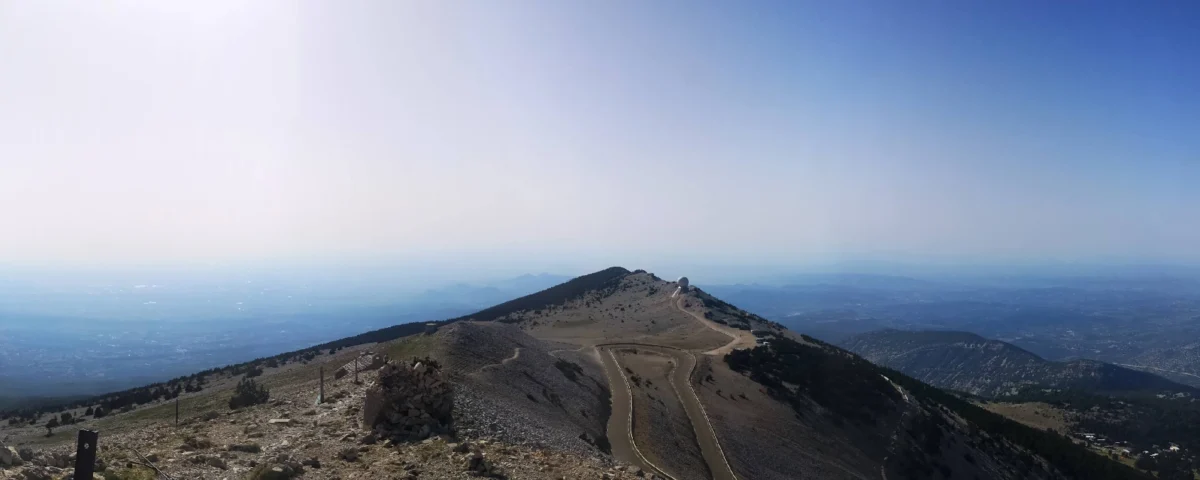
- The Mythology of European Cycling Climbs: Riding Europe’s famous mountain passes is a profound experience, steeped in history and legend, appealing to cyclists worldwide.
- Iconic Climbs and Their Significance: The article highlights legendary climbs like Mont Ventoux, Stelvio, Alpe d’Huez, Pico de Veleta, Transfăgărășan, and Passo di Gavia, each with unique features and histories.
- Mont Ventoux’s Unique Terrain and History: Mont Ventoux stands alone with a lunar landscape, fierce winds, and a tragic history, including the death of Tom Simpson and notable Tour de France moments.
- Stelvio Pass as a Giro d’Italia Icon: Famous for its 48 hairpins and high elevation, Stelvio has hosted memorable Giro d’Italia stages, including Fausto Coppi’s historic attack in 1953.
- The Challenge of Alpe d’Huez and Its Legendary Status: Known for its 21 hairpins and vibrant atmosphere, Alpe d’Huez is a symbol of cycling passion, hosting numerous Tour de France finishes.
The Great Cycling Climbs of Europe: A Rider’s Bucket List
There is a moment on every major mountain pass when the chatting stops, the breathing deepens, and it’s just you, your bike, and the road winding into the sky. As the founder of European Cycling Tours, I’ve had the immense privilege of riding the most famous cycling climbs Europe has to offer, and I can tell you firsthand: nothing compares to the mythology of these mountains.
When you spend your weekends training on the rolling lanes and punchy hills back home in the UK, making the journey across the channel to face these continental giants is a rite of passage. These aren’t just steep roads; they are the historic battlegrounds of the Grand Tours. They are the bucket list cycling climbs that cyclists from all over the world dream of conquering.
But tackling the hardest climbs in Europe shouldn’t mean roughing it. There is a profound difference between surviving a mountain and truly experiencing it. That is why our team is dedicated to pairing these brutal, beautiful ascents with 4-star comfort, expert on-road guidance, and the reassurance of a fully stocked support van right behind you.
Whether you are in the dreaming phase or actively planning your next great adventure, this guide will walk you through the most iconic Tour de France climbs, Giro d’Italia legends, and Vuelta a España beasts. Let’s look at the stats, the history, and what it actually takes to ride them.
Mont Ventoux… “The Giant of Provence“
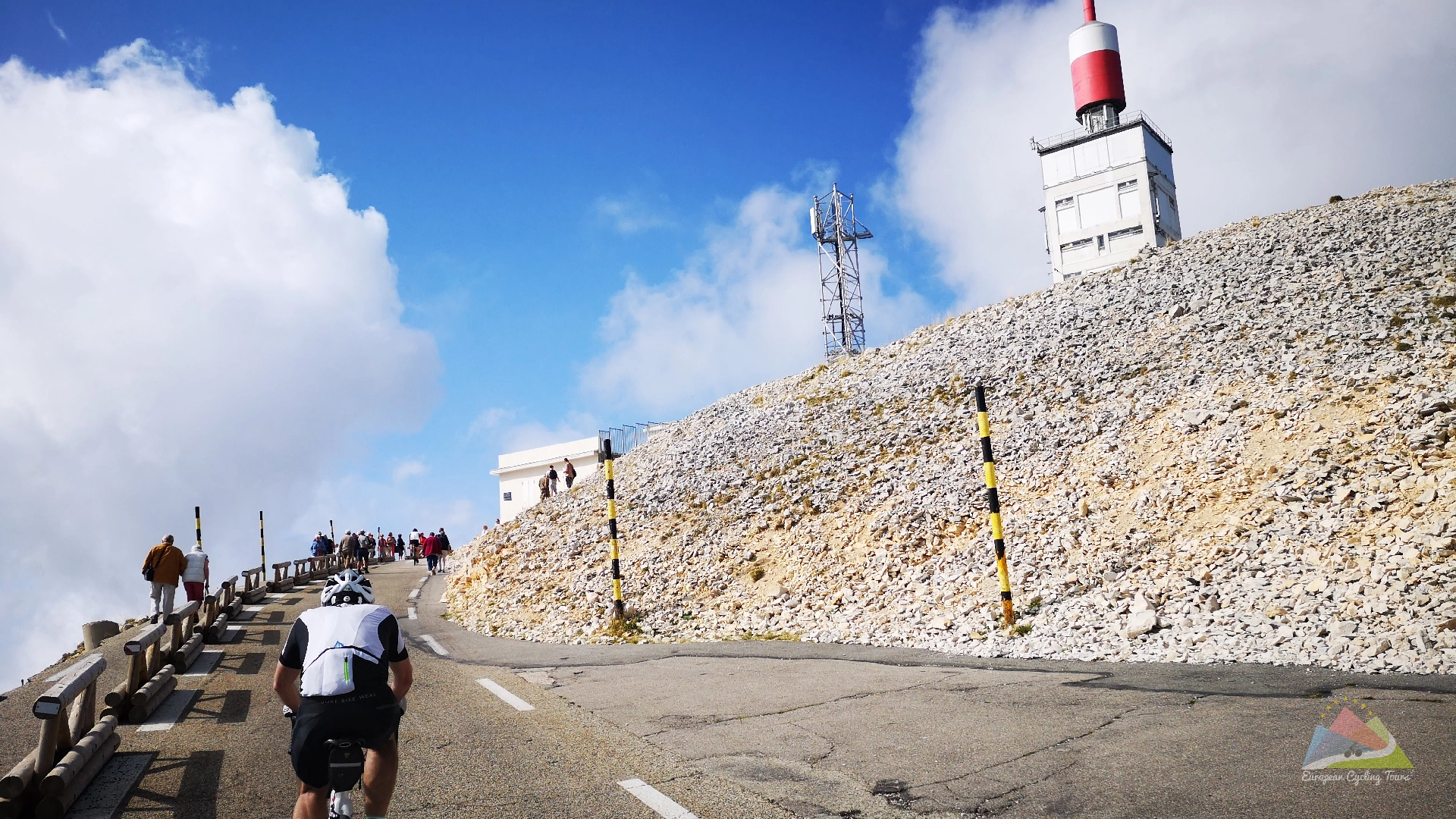
Mont Ventoux in the Provence region features a distinct lunar landscape and steep gradients. This endurance road cycling style rewards participants with an immense sense of achievement at the iconic mountain summit.
Why It’s Legendary: Rising solitary out of the Provence landscape, Mont Ventoux is entirely unique. Unlike the Alps or the Pyrenees, where peaks are clustered together, Ventoux stands alone, a weather-beaten monolith visible from miles away. The climb is essentially a tale of two mountains: the stifling, dense forest of the lower slopes, and the brutal, exposed, lunar-like limestone landscape of the final six kilometres. The mistral winds here can be ferociously strong, adding a psychological battle to the physical one.
The Stats (from Bédoin):
Summit Elevation: 1,909m
Distance: 21.4km
Average Gradient: 7.4%
Maximum Gradient: 12%
Grand Tour History & Famous Moments: Ventoux is steeped in triumph and tragedy. It is the site of the tragic passing of British rider Tom Simpson in 1967, whose memorial sits near the summit and remains a place of pilgrimage for cyclists. More recently, who could forget the absolute chaos of the 2016 Tour de France, when a crash caused by a motorbike in the dense crowds forced Chris Froome to literally run up the mountain in his cycling cleats to save his yellow jersey? It remains one of the most surreal sights in cycling history.
Ride It With Us: If you want to test yourself against the Giant, we don’t just do it once. Join us for the ultimate endurance test on our Mont Ventoux Cinglés Challenge, where we support you in ascending all three routes of the mountain in a single day.
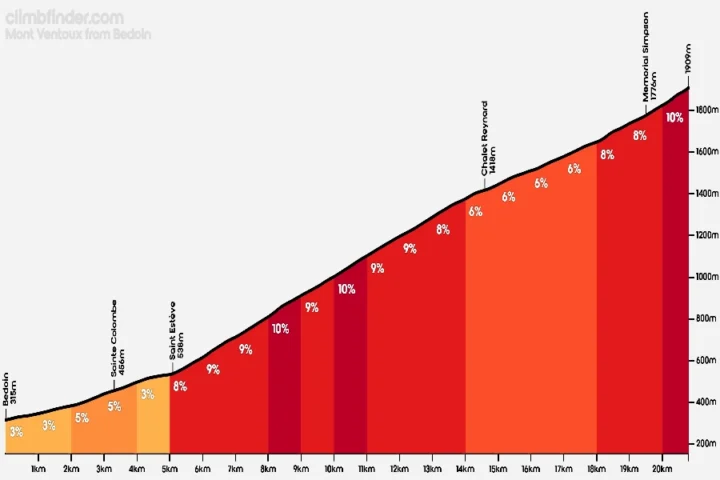
Mont Ventoux in Provence, France rises from vineyards to the famous barren summit, creating one of Europe’s most legendary alpine road cycling climbs. This climb profile reveals the gradient and elevation that make Ventoux unforgettable for cyclists exploring iconic guided rides.
Stelvio Pass… “The Visual Masterpiece“
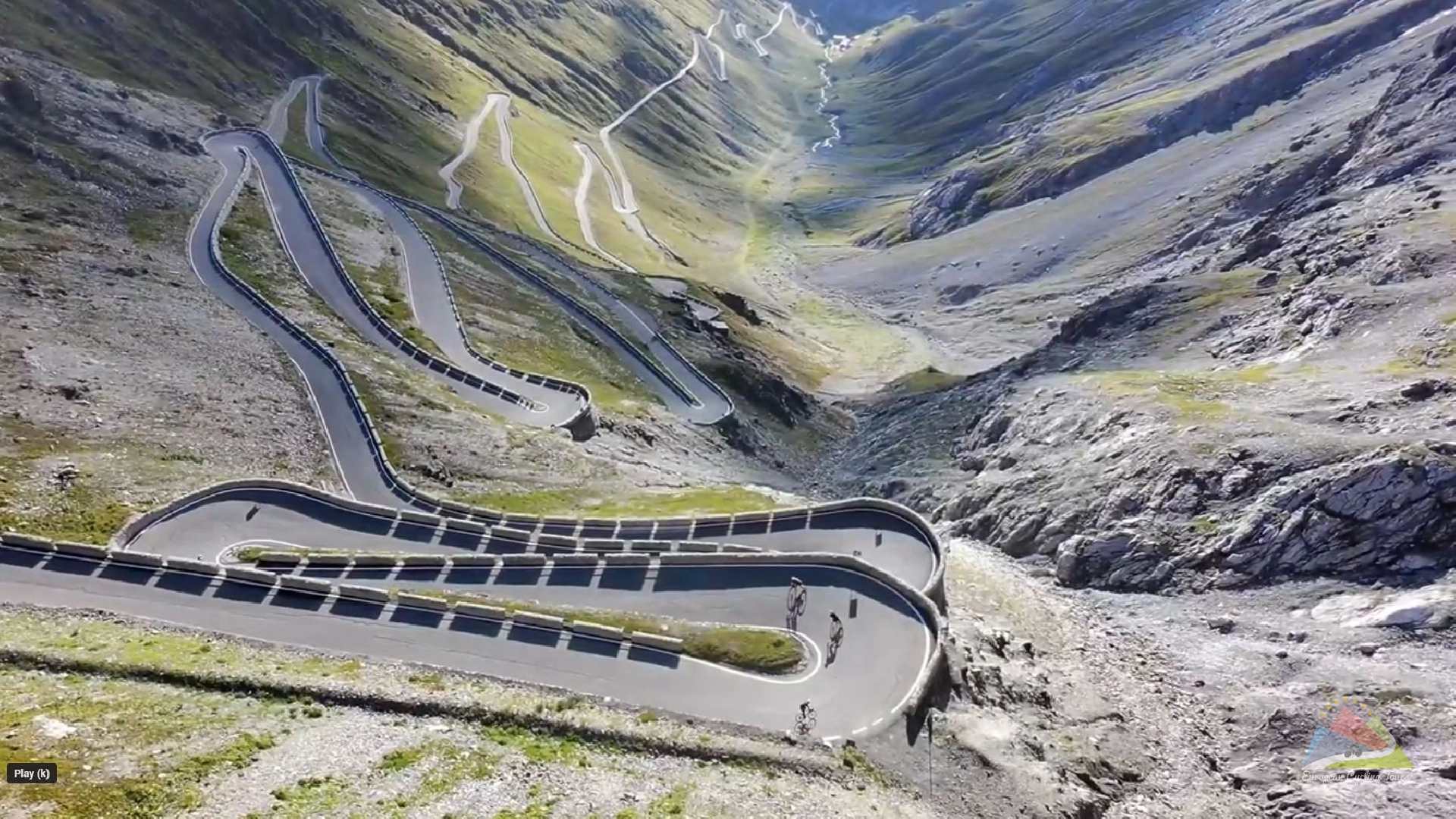
The Italian Alps feature the Stelvio Pass, a high-altitude mountain road ideal for endurance road cycling. Navigating these famous hairpins provides an immense sense of shared achievement for a guided group of riders.
Why It’s Legendary: If you asked an artist to paint the ultimate cycling climb, they would paint the Stelvio. Famous for its staggering 48 numbered hairpins (tornanti) on the northern side from Prato, it is a marvel of engineering that drapes over the Italian Alps like a ribbon. Riding the Stelvio is rhythmic; you count down the corners as you ascend through the pine forests before breaking above the tree line into a glacial, high-altitude arena. The sheer scale of the stone walls and the cascading switchbacks make it one of the most photographed roads on earth.
The Stats (from Prato allo Stelvio):
Summit Elevation: 2,757m
Distance: 24.3km
Average Gradient: 7.4%
Maximum Gradient: 14%
Grand Tour History & Famous Moments: The Stelvio is the quintessential Giro d’Italia mountain. It frequently serves as the Cima Coppi—the highest point of the entire race. Its legend was cemented in 1953 when the great Fausto Coppi attacked the race leader, Hugo Koblet, on the unpaved hairpins to snatch the pink jersey on the penultimate day. The image of riders carving through avenues of deep snowbanks at the summit is synonymous with the Giro’s brutal beauty.
Ride It With Us: Experience the majesty of the Italian Alps and cross borders on two wheels by joining our epic Munich To Milan Trans-Alp Stelvio tour, featuring 4-star recovery waiting for you after the descent.
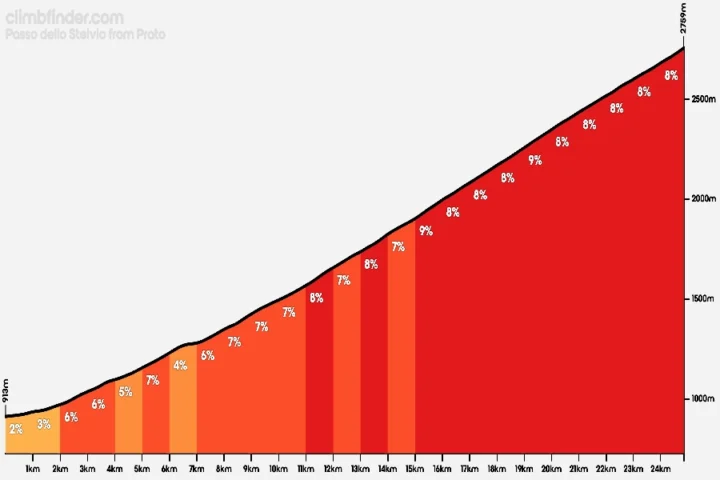
Stelvio Pass in the Italian Alps rises through the Ortler mountains in one of Europe’s most spectacular high-altitude road cycling climbs. This climb profile illustrates the gradients and elevation that define this legendary alpine ascent.
Alpe d’Huez… “The Hollywood Climb“
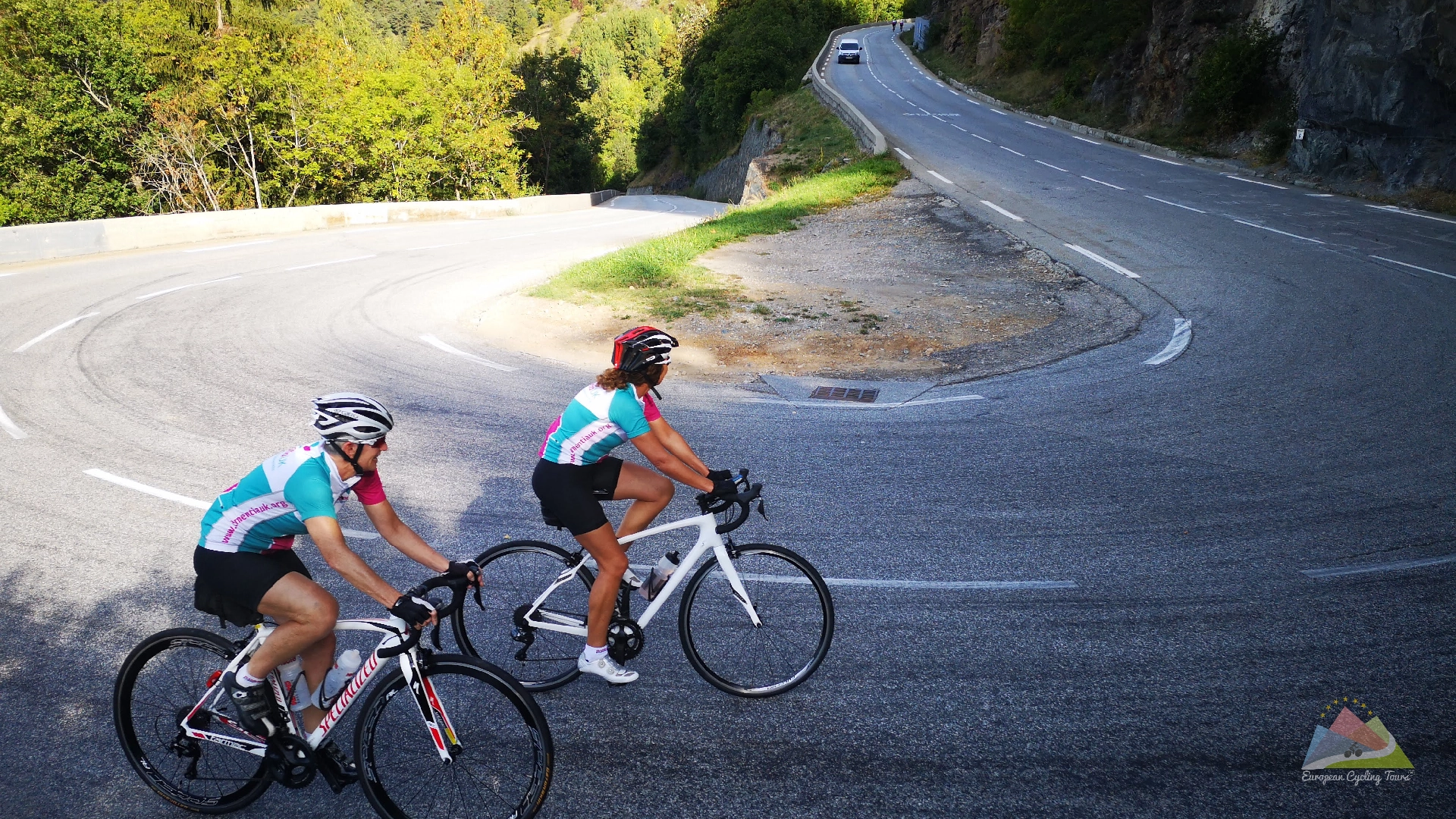
The French Alps feature Alpe d’Huez, a legendary mountain climb ideal for endurance road cycling. Reaching this iconic summit provides a profound sense of personal joy for riders on a professionally supported tour.
Why It’s Legendary: Alpe d’Huez is the stadium of cycling. It isn’t the highest pass, nor is it the longest, but it is without a doubt the most electrifying. Defined by its 21 numbered hairpins—each bearing the name of past stage winners—the climb serves as a punishing, unrelenting ramp right from the base in Bourg d’Oisans. The atmosphere here during the Tour is akin to a rock concert, but even on a quiet Tuesday in September, the ghosts of cycling legends ride beside you.
The Stats:
Summit Elevation: 1,860m
Distance: 13.8km
Average Gradient: 8.1%
Maximum Gradient: 13%
Grand Tour History & Famous Moments: This mountain has decided the fate of the yellow jersey more times than any other. It’s famous for “Dutch Corner” (Bend 7), where thousands of orange-clad fans turn the mountain into a wall of noise. Marco Pantani holds the incredible (and controversial) ascent record of 36 minutes and 40 seconds set in 1995. For British fans, Geraint Thomas winning the stage in the yellow jersey in 2018 is a modern-day masterpiece.
Ride It With Us: Want to test your legs on the 21 bends? This iconic ascent is a highlight of our premium Alps Cycling Holiday, where our support vehicles ensure you have the fuel you need to push through those steep lower ramps.
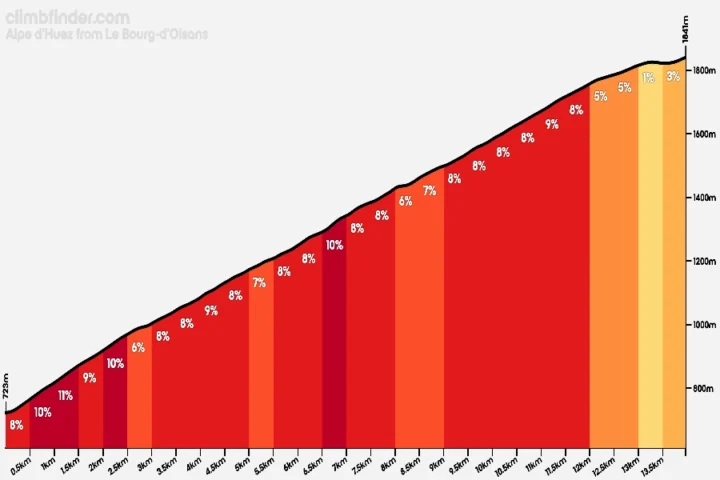
Alpe d’Huez in the French Alps climbs dramatically above the Oisans valley, creating one of Europe’s most famous alpine road cycling ascents. This climb profile reveals the gradients and elevation behind the legendary switchbacks riders experience.
Pico de Veleta… “The Roof of Europe“
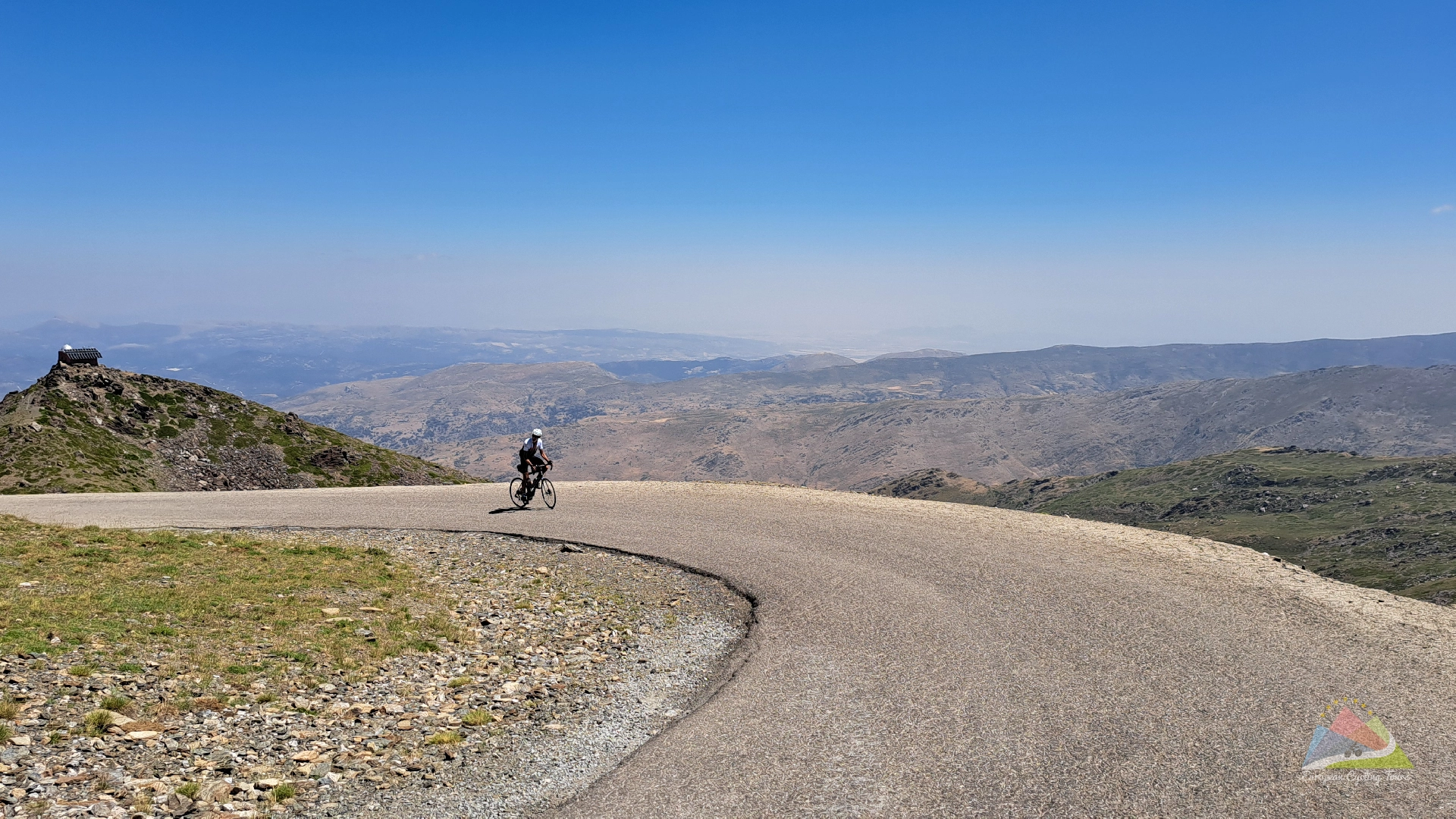
The Sierra Nevada region features dramatic high altitude terrain for elite road cycling. Reaching the Pico de Veleta summit offers a profound sense of achievement while our expert support ensures a safe mountain descent.
Why It’s Legendary: While the French and Italian climbs get the mainstream glory, those in the know look to the south of Spain. Pico de Veleta is, quite simply, the highest paved road in Europe. Tucked away in the Sierra Nevada mountain range in Andalusia, this is an altitude challenge unlike any other. You start in the warm, Mediterranean heat of Granada and ride upwards for over 40 kilometres, ascending into a barren, rocky, high-altitude world where the air grows noticeably thin. It is a true test of pacing, endurance, and mental fortitude.
The Stats (from Pinos Genil):
Summit Elevation: 3,398m
Distance: 43km
Average Gradient: 6.5%
Maximum Gradient: 15%
Grand Tour History & Famous Moments: Because of its extreme altitude and the fact that the very top section of the road degrades into rough tarmac and gravel, the Vuelta a España rarely goes all the way to the summit. Instead, the race typically finishes at the ski station lower down (around 2,500m), which has seen fierce battles between modern climbers. But for the purist on a bucket-list mission, pushing past the barriers to the absolute top is a badge of absolute honour.
Ride It With Us: Tackle the ultimate altitude challenge with comprehensive vehicle support (crucial as the air thins out) on our Roof of Europe – Pico del Veleta itinerary.
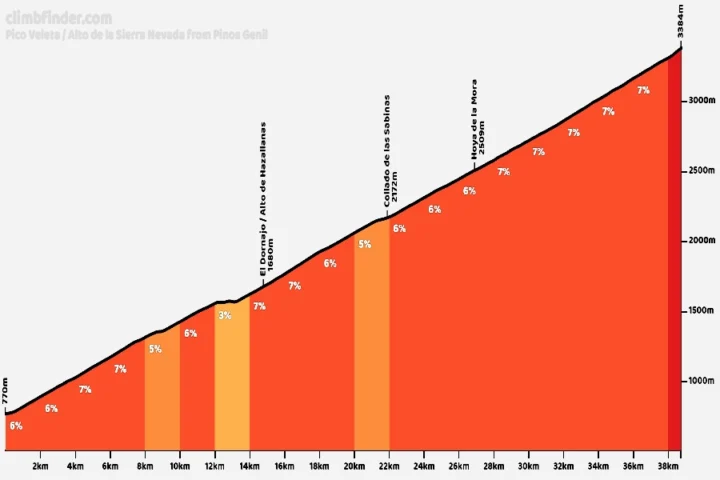
Pico de Veleta in Spain’s Sierra Nevada rises above Granada into one of Europe’s highest paved roads, creating a spectacular high-altitude road cycling climb. This profile reveals the gradients and elevation that define this iconic mountain ascent.
Transfăgărășan Pass… “The Transylvanian Epic“
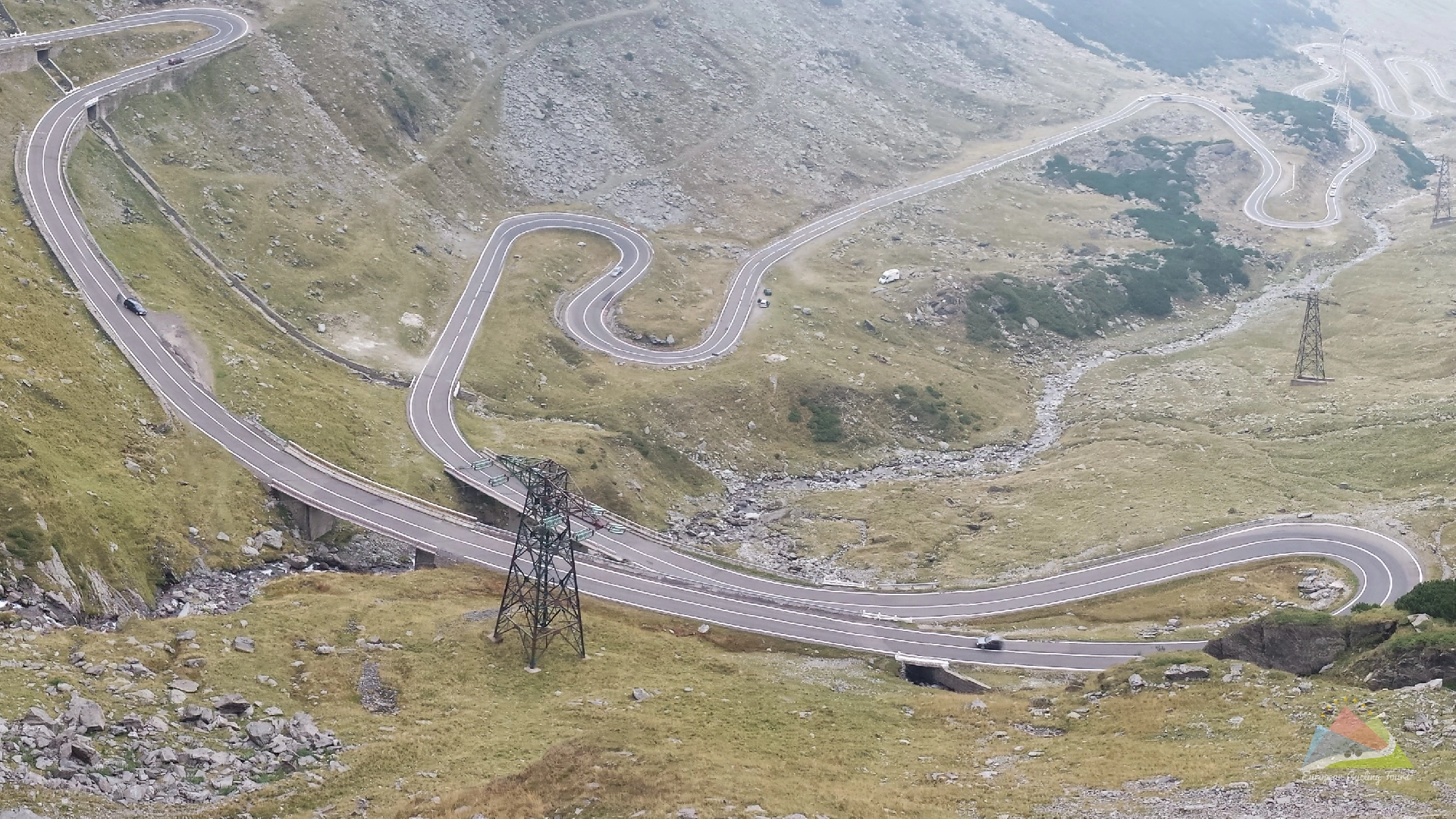
The Transfagarasan Pass in the Romanian Carpathians features a dramatic serpent road perfect for endurance road cycling. This epic mountain descent provides a profound sense of achievement for every supported rider.
Why It’s Legendary: If you want to step off the beaten track and ride something that feels truly wild, the Transfăgărășan Pass in Romania is the ultimate frontier. Carved into the Carpathian Mountains in the 1970s, this ribbon of tarmac snakes its way through dense alpine forests, past cascading waterfalls, and up to a glacial lake. It gained global fame when the Top Gear team famously in 2014 dubbed it the “best road in the world,” but experiencing it from the saddle of a bike is an entirely different level of awe. It’s remote, it’s dramatic, and yes, you might even spot a brown bear in the woods on the lower slopes!
The Stats (North Side from Cârțișoara):
Summit Elevation: 2,042m
Distance: 24km
Average Gradient: 6%
Maximum Gradient: 10%
Grand Tour History & Famous Moments: While it sits outside the traditional Grand Tour circuit of France, Italy, and Spain, the Transfăgărășan is the crown jewel of the Sibiu Cycling Tour. Professional riders who tackle this route frequently marvel at the sheer scale of the engineering. The sweeping, photogenic viaducts and the dark, echoing tunnel near the summit at Bâlea Lake make for an unforgettable, cinematic day on the bike.
Ride It With Us: This is an adventure that requires serious logistical support. Let our team handle the logistics, route planning, and support vehicles on our spectacular Romania Cycling Holiday – The Transfagarasan Epic, so you can focus entirely on soaking in the wild Carpathian scenery.
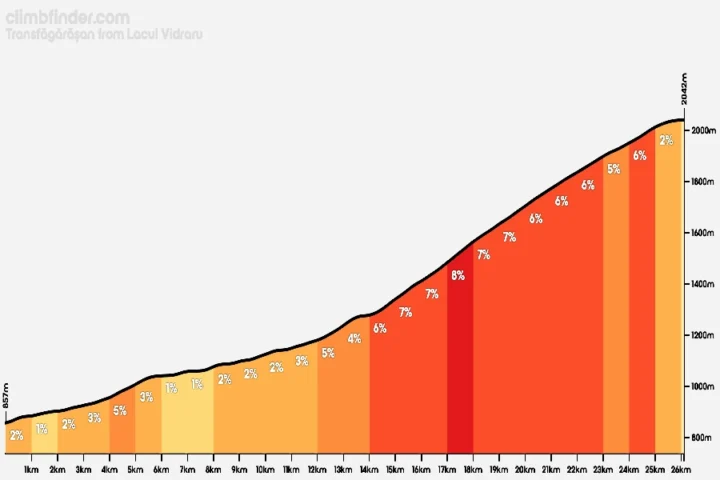
Transfăgărășan Pass rises through the wild Carpathian Mountains of Romania, linking forested valleys with high alpine ridges. This climb profile illustrates the gradients and elevation that make the road a memorable challenge for cyclists discovering iconic European climbs.
Passo di Gavia… “The Beautiful Beast“
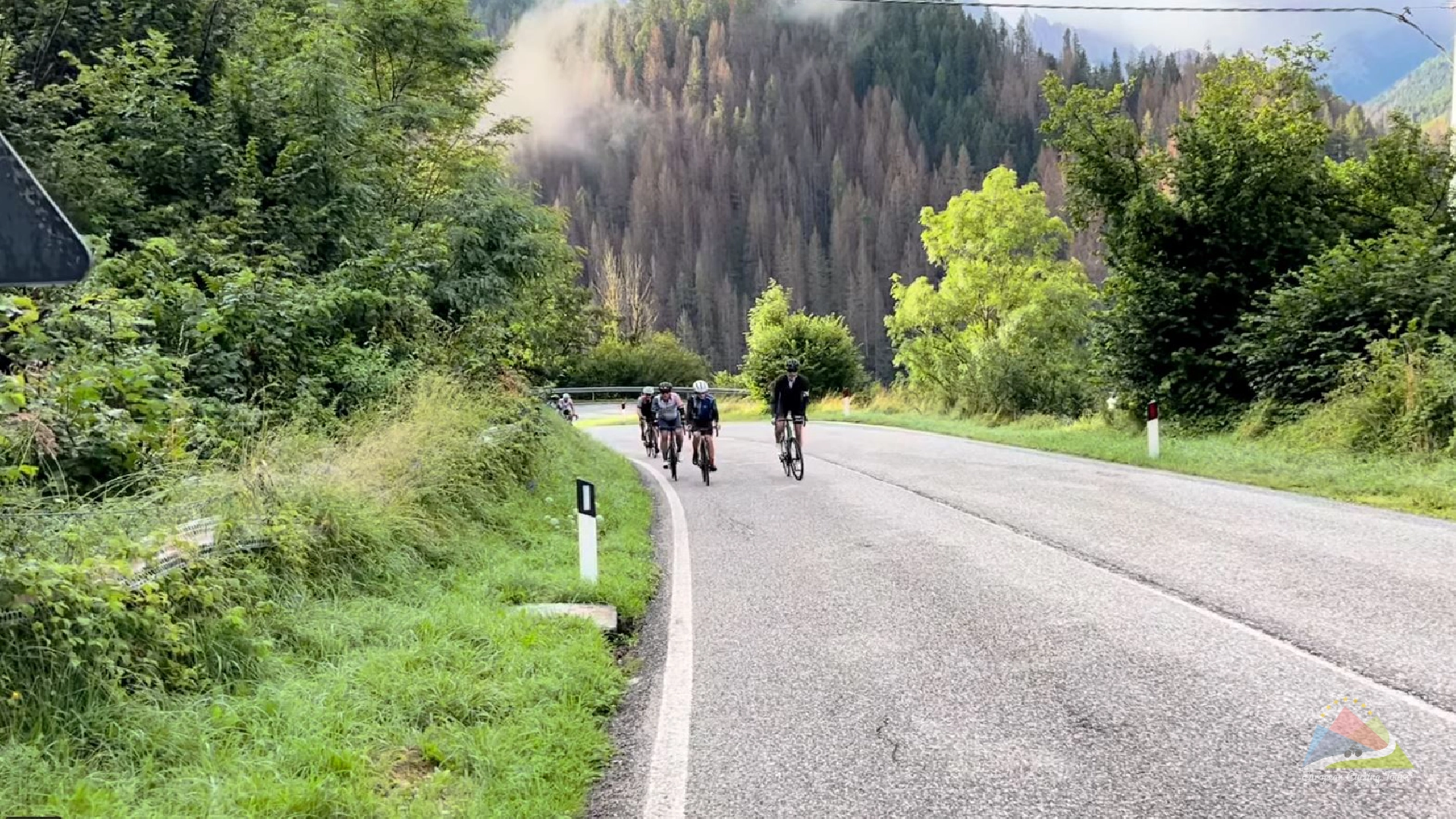
The Italian Alps feature the Passo di Gavia, a high-altitude mountain pass ideal for endurance road cycling. Reaching this summit provides an immense sense of shared joy for riders on a professionally supported tour.
Why It’s Legendary: The Gavia is the Stelvio’s wilder, untamed sibling. Where the Stelvio is a masterpiece of wide, sweeping engineering, the Gavia is narrow, rugged, and completely intimidating. Riding up from Ponte di Legno, the road frequently shrinks to a single lane clinging to the edge of the cliff face. It is a hauntingly beautiful place, often battered by unpredictable weather, requiring you to dig deep into your mental reserves. Reaching the summit feels less like a physical achievement and more like a hard-won survival mission.
The Stats (from Ponte di Legno):
Summit Elevation: 2,621m
Distance: 17.3km
Average Gradient: 7.9%
Maximum Gradient: 16%
Grand Tour History & Famous Moments: To utter the word “Gavia” to any cycling historian is to instantly invoke the 1988 Giro d’Italia. On a day that went down in cycling infamy, the peloton was hit by a freak blizzard. Riders crested the summit completely frozen, crying in pain as they attempted to descend through the snow and ice. American Andy Hampsten battled through the apocalyptic conditions to take the pink jersey, cementing the Gavia’s reputation as a mountain that commands absolute respect.
Ride It With Us: Experience the breathtaking, jagged peaks of Italy and tackle this legendary ascent as part of our supported Dolomites Cycling Holiday, returning to a hot shower and a 4-star meal after conquering the mountain.
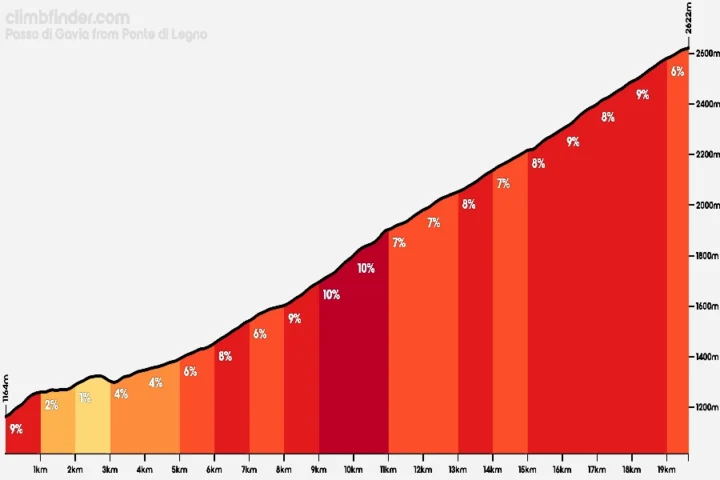
Passo di Gavia in Lombardy, Italy rises through the rugged Italian Alps as one of cycling’s most evocative high-mountain ascents. This climb profile illustrates the gradients and elevation that challenge riders seeking legendary European road cycling adventures.
Col du Tourmalet… “The Pyrenean Giant“
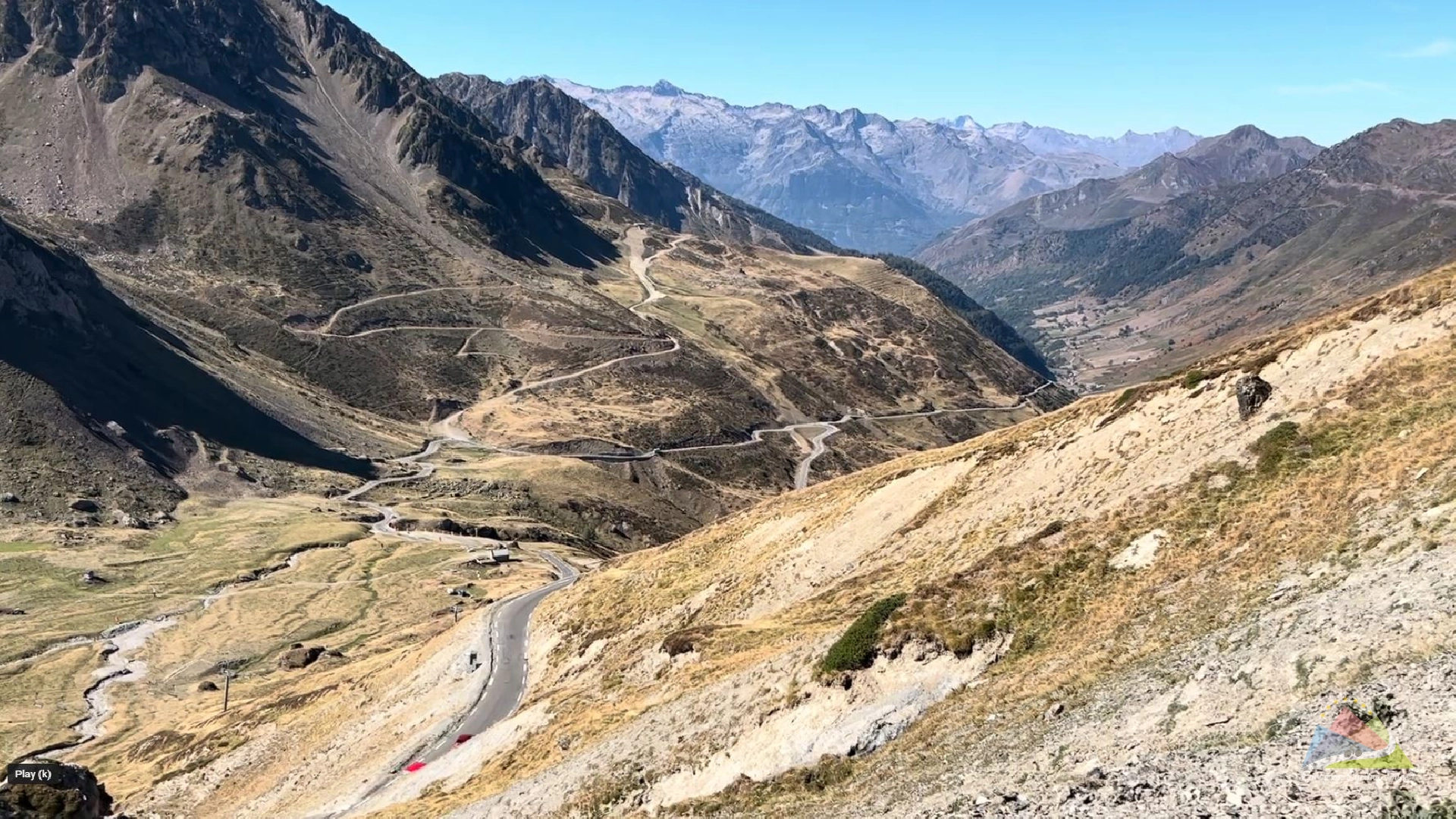
The French Pyrenees feature the Col du Tourmalet, a legendary mountain pass ideal for endurance road cycling. Reaching this iconic summit provides a profound sense of personal joy for riders on a professionally supported tour.
Why It’s Legendary: You simply cannot write a bucket list of European climbs without the Col du Tourmalet. It is the highest paved mountain pass in the French Pyrenees and the undisputed king of the region. From the moment you roll out of Luz-Saint-Sauveur or Sainte-Marie-de-Campan, you are riding through cycling mythology. The gradient is punishingly relentless, offering almost no sections to recover. Reaching the summit and standing next to the iconic silver statue of the “Géant” (the Giant) is a rite of passage for every serious cyclist.
The Stats (from Luz-Saint-Sauveur):
Summit Elevation: 2,115m
Distance: 19km
Average Gradient: 7.4%
Maximum Gradient: 13%
Grand Tour History & Famous Moments: The Tourmalet is the most visited mountain in the history of the Tour de France. Its inclusion in 1910 changed the sport forever. When Octave Lapize crossed the summit on rough, unpaved dirt roads during that inaugural mountain stage, he famously shouted at the race organisers, “Vous êtes des assassins!” (“You are assassins!”). More than a century later, it remains just as gruelling.
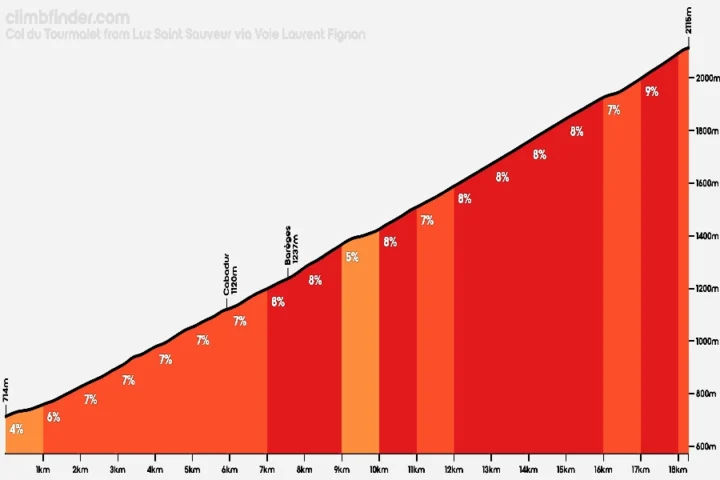
Col du Tourmalet in the French Pyrenees is one of Europe’s most iconic mountain passes, famed for its long gradients and Tour de France heritage. This climb profile reveals the elevation and slopes that attract cyclists seeking legendary guided rides.
Alto de l’Angliru… “The Spanish Wall“
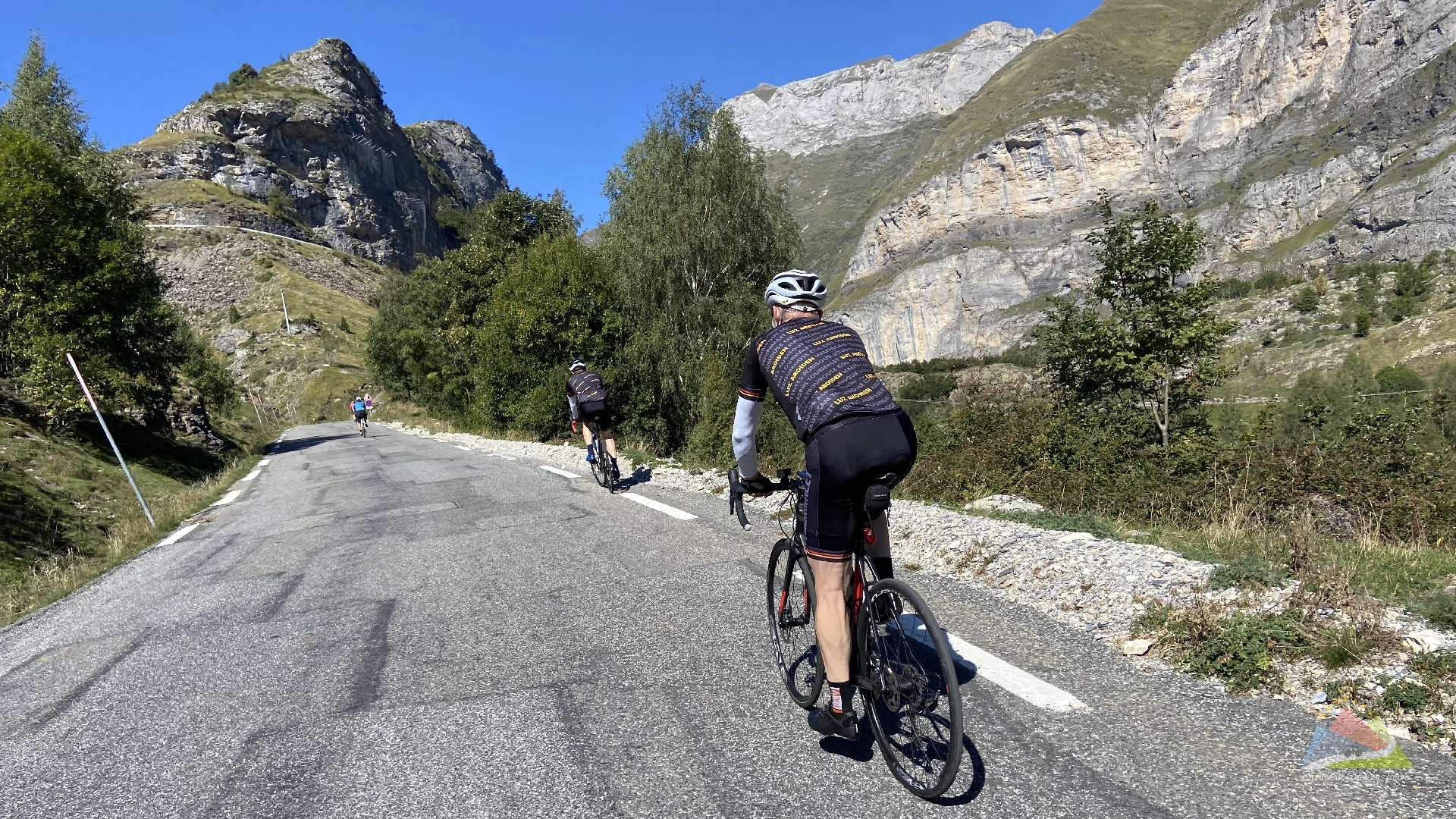
The Cantabrian Mountains feature the Alto de l’Angliru, a steep mountain peak ideal for endurance road cycling. Reaching this formidable summit provides a deep sense of personal pride for riders on a supported tour.
Why It’s Legendary: Fear. Pure, unadulterated fear. While climbs like the Galibier or the Tourmalet grind you down with their length and altitude, the Angliru simply tries to snap your legs. Tucked away in the Asturias region of northern Spain, this narrow goat track is widely considered the hardest professional cycling climb in Europe. The lower slopes lull you into a false sense of security before unleashing the infamous Cueña les Cabres section, where the gradient tips over 23%. You will need the lowest gears you can possibly find, and even then, simply keeping the front wheel on the ground is a battle.
The Stats (from La Vega-Riosa):
Summit Elevation: 1,573m
Distance: 12.5km
Average Gradient: 9.9%
Maximum Gradient: 23.5%
Grand Tour History & Famous Moments: Introduced to the Vuelta a España in 1999, it immediately caused uproar among the professionals. In 2002, British rider David Millar famously stopped just short of the finish line and handed over his race number in protest of the dangerous, wet, and impossibly steep conditions, refusing to cross the line. It is a climb that doesn’t just break riders physically; it breaks them mentally.
Ride It With Us: Looking to push your limits in Spain or tackle the wider mountain ranges of the region? Build your endurance and climbing legs on our spectacular Pau to Girona Cycle Tour, traversing the Spanish border and taking on the very best of the Pyrenees.
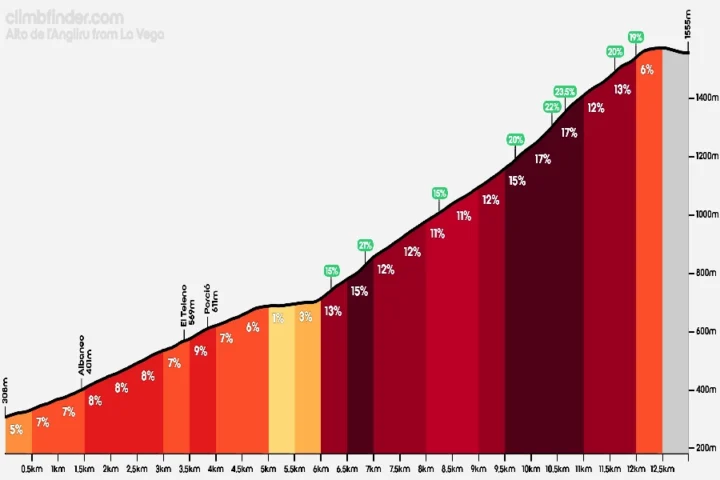
The Alto de l’Angliru in Asturias, Spain rises through the Cantabrian Mountains with punishing gradients and dramatic scenery, creating one of Europe’s most formidable road cycling climbs and a legendary challenge for riders exploring epic guided cycling adventures.
Col du Galibier… “The Alpine Giant“
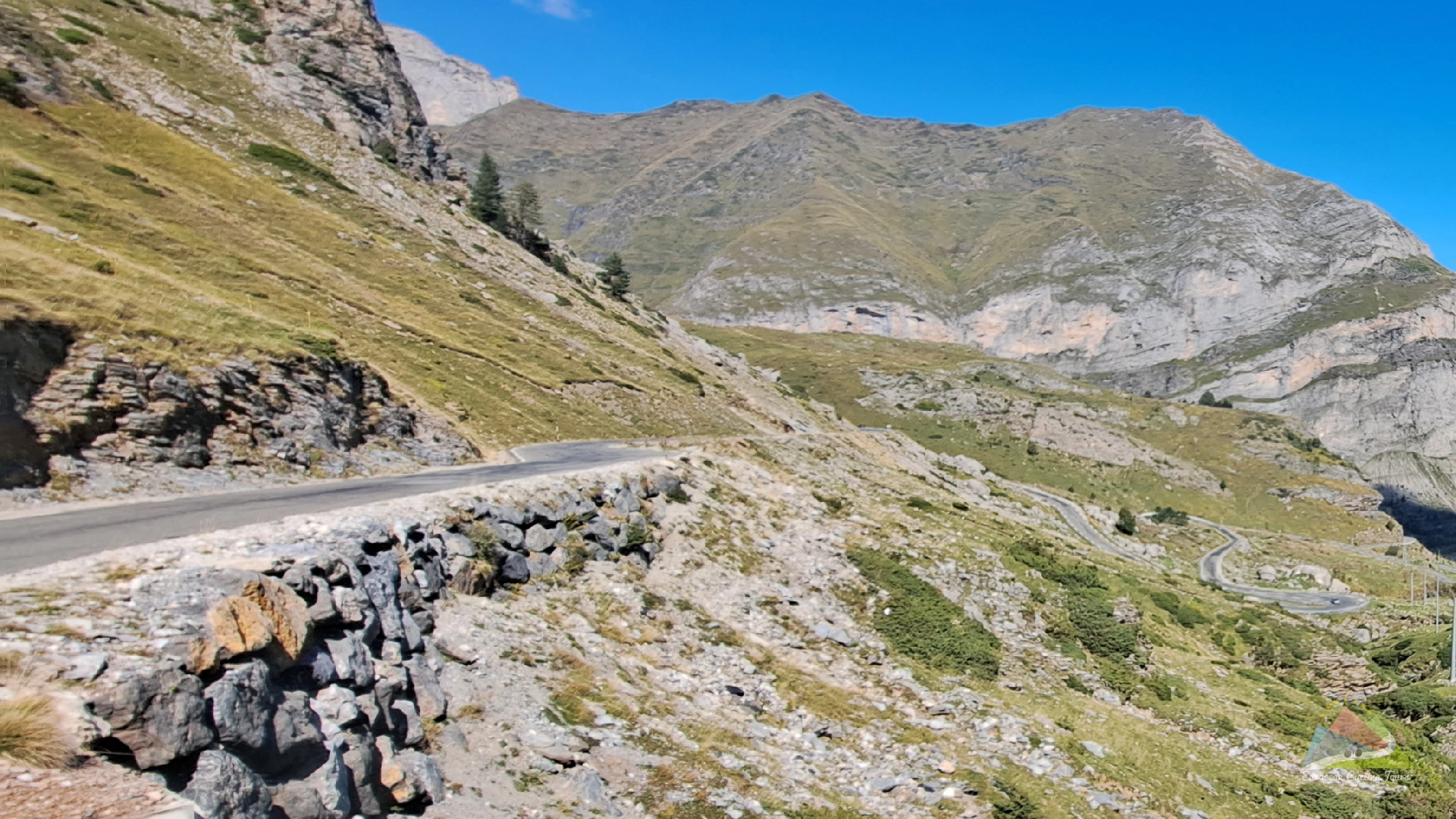
The French Alps feature the Col du Galibier, a picturesque mountain pass ideal for endurance road cycling. Ascending this high altitude road provides an immense sense of personal pride for a cyclist on a guided tour.
Why It’s Legendary: The Galibier is a monster. Towering high above the tree line, it thrusts riders into a desolate, oxygen-deprived wasteland of jagged rock and snow. To even reach the foot of the Galibier, you must first conquer either the Col du Télégraphe or the Col du Lautaret, meaning your legs are already burning before the real test begins. The final kilometre, kicking up to a lung-busting gradient near the summit tunnel, feels like riding through thick mud. It is pure, unadulterated suffering, rewarded by a panoramic view of the highest peaks in the Alps.
The Stats (from Valloire, via Télégraphe):
Summit Elevation: 2,642m
Distance: 18.1km
Average Gradient: 6.9%
Maximum Gradient: 12%
Grand Tour History & Famous Moments: First used in 1911, it was the original “roof” of the Tour de France. The great Henri Desgrange, founder of the Tour, loved this mountain so much that a monument to him stands near the summit. In 1998, a swashbuckling Marco Pantani launched a devastating attack in the freezing rain on the Galibier, destroying Jan Ullrich’s lead and riding into yellow in one of the most iconic displays of climbing prowess in modern history.
Ride It With Us: Tick off multiple legendary summits in one unforgettable trip. The Galibier awaits you on our fully supported Alps Cycling Holiday.
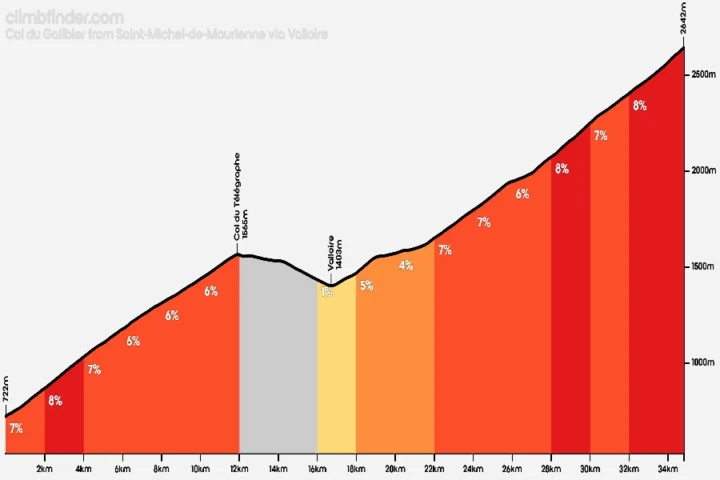
Col du Galibier in the French Alps of France is one of the highest historic mountain passes in professional road cycling. This climb profile illustrates the gradients and elevation that make Galibier a legendary challenge for cyclists exploring iconic Alpine routes.
Col d’Aubisque… “The Pyrenean Balcony“
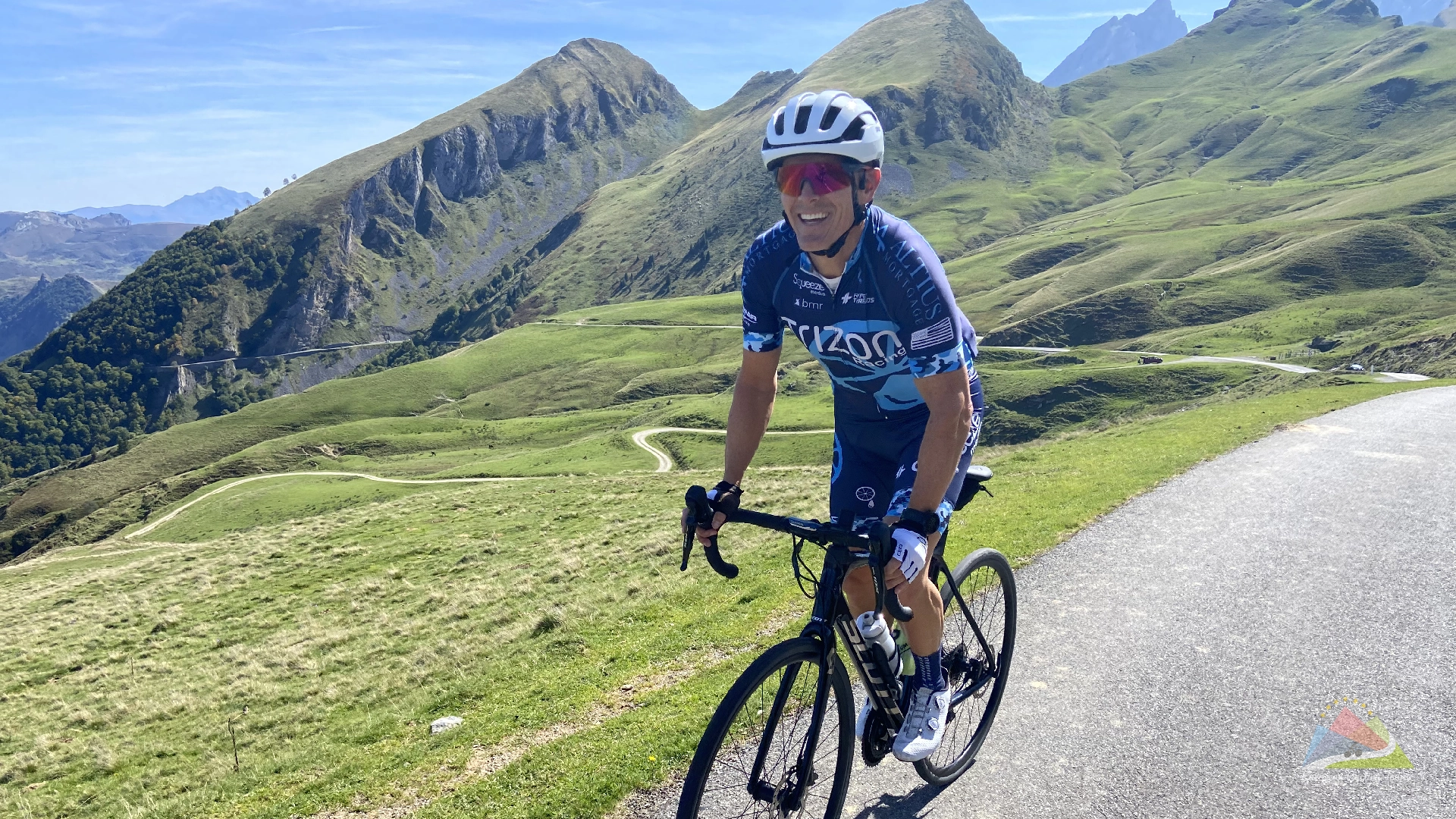
The French Pyrenees feature the Col d’Aubisque, a picturesque mountain pass ideal for endurance road cycling. Reaching this scenic summit provides a profound sense of personal joy for riders on a professionally supported tour.
Why It’s Legendary: If the Tourmalet is the brute force of the Pyrenees, the Col d’Aubisque is its wildly scenic counterpart. The route from Argelès-Gazost, taking in the Col du Soulor before traversing the breathtaking Cirque du Litor, is arguably the most beautiful stretch of road in all of France. The road clings precariously to the cliffside, with low stone walls separating you from a sheer drop into the valley below. Free-roaming horses and low-hanging mist often add a magical, mythical quality to the ascent.
The Stats (from Argelès-Gazost):
Summit Elevation: 1,709m
Distance: 30.1km (including the Soulor)
Average Gradient: 4.1% (deceiving due to the descent between peaks)
Maximum Gradient: 10%
Grand Tour History & Famous Moments: The Aubisque has featured in the Tour de France over 70 times, making it one of the absolute pillars of the race. It was the site of the infamous 1951 crash where yellow jersey wearer Wim van Est plummeted 70 metres down the ravine. Miraculously surviving, he had to be hoisted back up using a rope made of tied-together bicycle tires! Today, the summit is marked by giant, vintage bicycle sculptures painted in the colours of the Tour’s classification jerseys.
Ride It With Us: Experience the majesty of the Cirque du Litor and the rugged beauty of this historic climb on our meticulously planned Pyrenees Cycling Holiday, complete with premium 4-star accommodation to ensure you recover in absolute comfort.
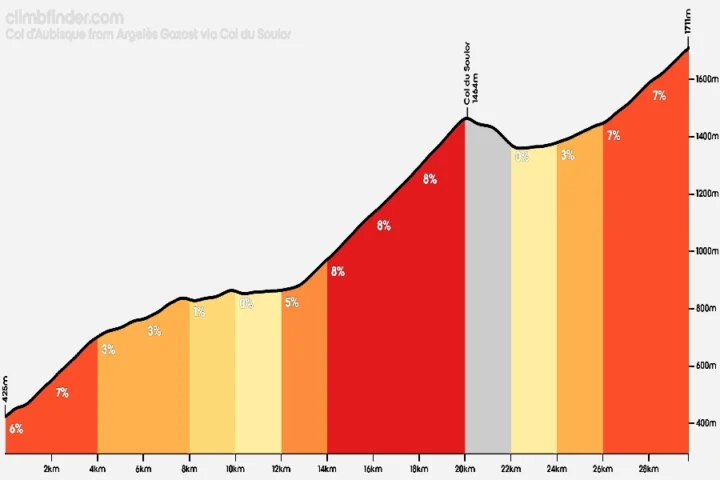
Col d’Aubisque in the French Pyrenees is one of the most storied mountain road climbs in European road cycling. This climb profile reveals the gradients and elevation that define the ascent for cyclists exploring legendary Pyrenean rides.
Sa Calobra… “The Serpent of Mallorca“
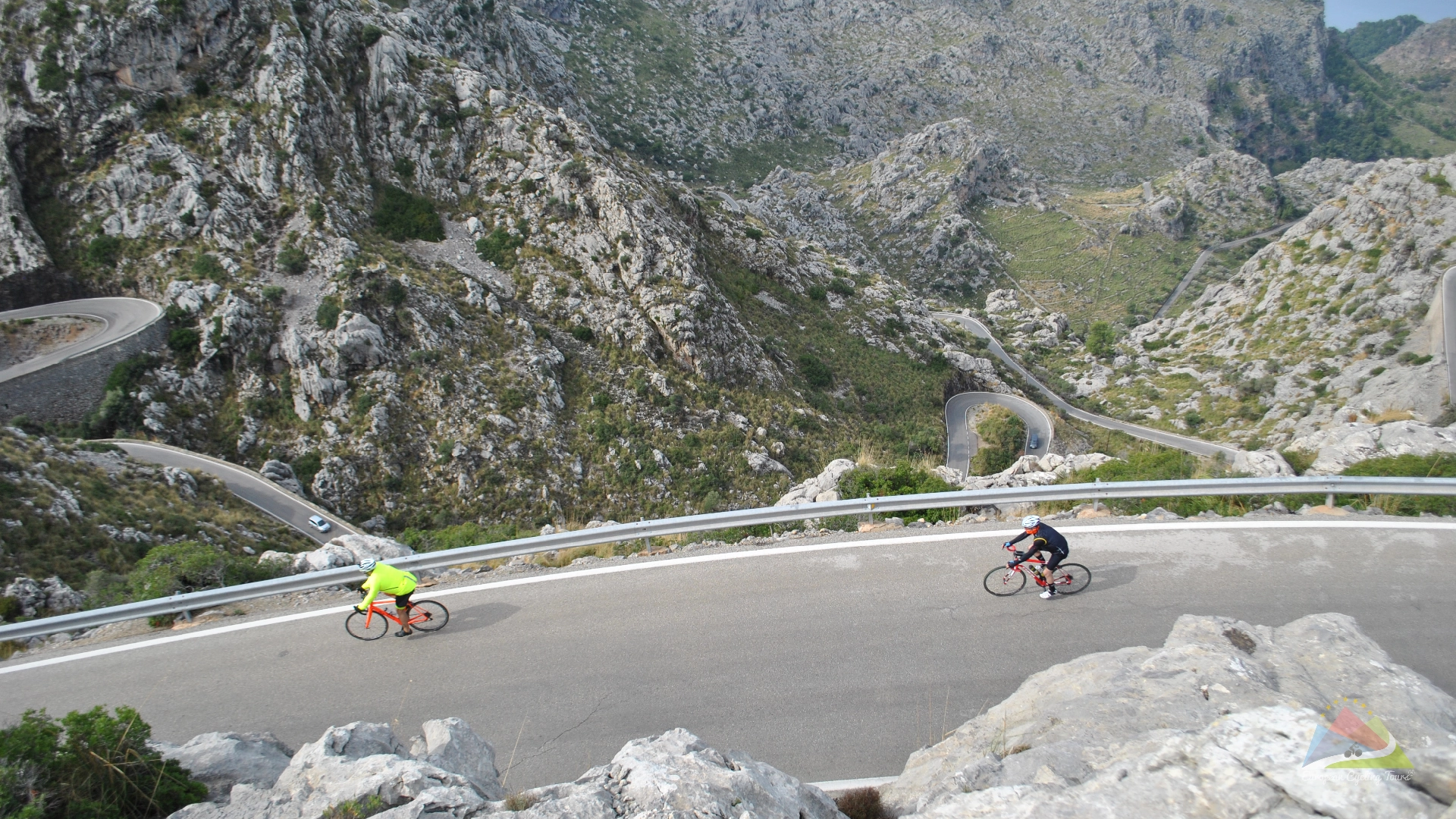
Majorca features Sa Calobra, a spectacular mountain road ideal for technical road cycling. Descending these famous hairpins provides an immense sense of pure exhilaration for a guided group of riders on a supported tour.
Why It’s Legendary: Sa Calobra is an anomaly in the cycling world. It doesn’t lead anywhere; it is a dead-end road that plummets down to a secluded cove on the Mediterranean Sea. To ride it, you must first descend it. Designed by Italian engineer Antonio Parietti in 1932 entirely for the joy of tourism (and deliberately built without a single tunnel), the road twists and turns back on itself like a dropped ribbon, including the famous “Tie Knot”—a 270-degree spiral bridge. Riding back out of the cove, with the azure sea behind you and the dramatic limestone karst walls closing in, is a pure bucket-list experience.
The Stats (from the port):
Summit Elevation: 682m
Distance: 9.4km
Average Gradient: 7.1%
Maximum Gradient: 12%
Grand Tour History & Famous Moments: While Sa Calobra has never been featured in a Grand Tour due to its dead-end nature, it is the undisputed testing ground for the professional peloton during their winter training camps. Sir Bradley Wiggins famously used it to benchmark his fitness ahead of his 2012 Tour de France victory.
Ride It With Us: Swap the unpredictable British weather for glorious sunshine and flawless Spanish tarmac. Join us to tackle Sa Calobra and the stunning Tramuntana mountains on our Majorca Cycling Holidays.
Sa Calobra in the Serra de Tramuntana, Mallorca, Spain is a breathtaking Mediterranean mountain climb famous for its sweeping hairpins and dramatic coastal scenery. This climb profile reveals the gradients that make the ascent unforgettable for road cyclists.
Mount Teide… “The Volcanic Proving Ground“
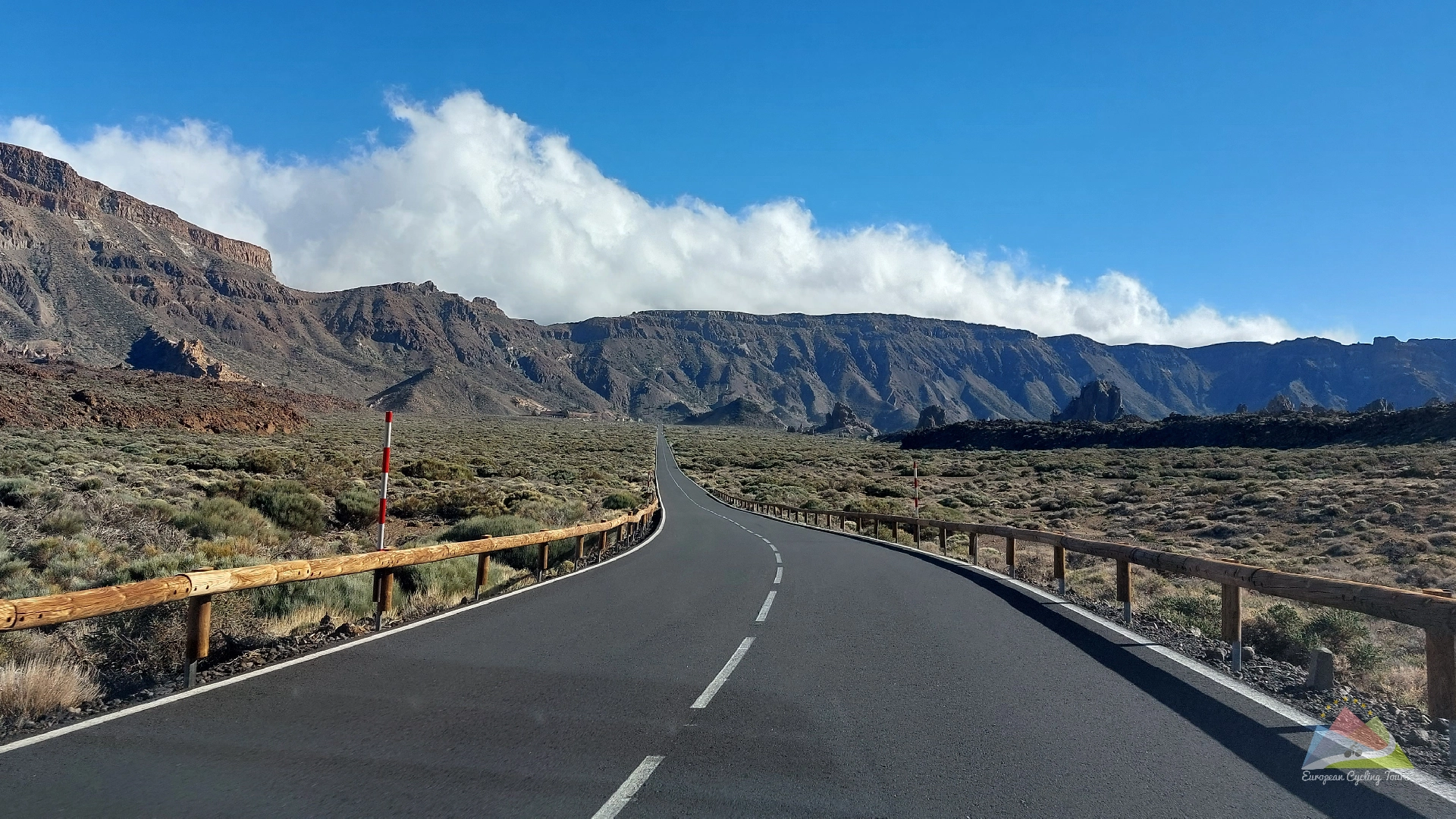
The Canary Islands feature Mount Teide, a volcanic mountain pass ideal for endurance road cycling. Ascending through the lava fields provides an immense sense of atmospheric wonder for riders on a guided cycling holiday.
Why It’s Legendary: If you want to know how the modern professional peloton prepares for the Grand Tours, look no further than Mount Teide. Dominating the island of Tenerife, this dormant volcano offers something incredibly rare: continuous, uninterrupted climbing from sea level to over 2,300 metres. The landscape shifts dramatically as you ascend, moving from lush, tropical coastal towns through dense pine forests, before bursting out into the alien, rocky expanse of the volcanic crater. It is an extraordinary, continuous effort that demands massive endurance.
The Stats (from Los Cristianos):
Summit Elevation: 2,325m
Distance: 45km
Average Gradient: 5%
Maximum Gradient: 10%
Grand Tour History & Famous Moments: Teide isn’t famous for hosting races; it is famous for winning them. The Parador hotel located in the crater has become the default high-altitude training hub for practically every Grand Tour winner of the last decade. It is where riders like Chris Froome, Primož Roglič, and Tadej Pogačar spend weeks isolated at altitude, putting in massive, grinding efforts on the volcanic slopes before flying to mainland Europe to dominate the summer races.
Ride It With Us: Experience the pro-level training lifestyle and endless winter sunshine. Test your endurance on the longest continuous climb in Europe on our 4-star Tenerife Cycling Holiday.
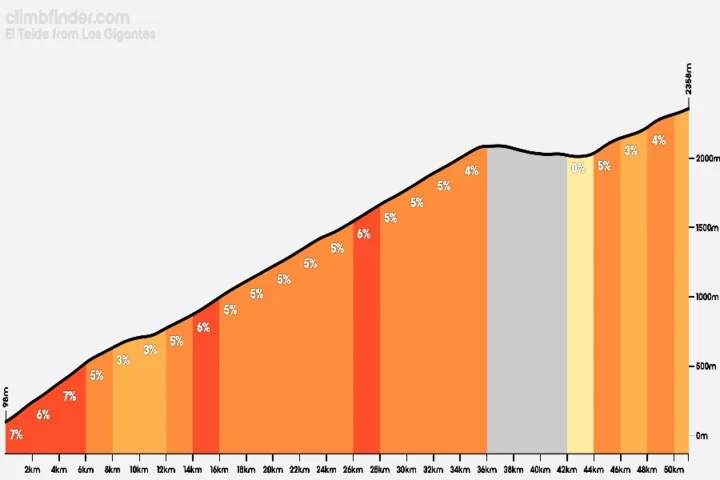
Mount Teide in Tenerife rises through stark volcanic terrain to Spain’s highest summit road, creating one of Europe’s most remarkable long mountain cycling climbs. This climb profile reveals the steady gradients and elevation that define this unforgettable volcanic ascent.
Profile Image Source Credit: climbfinder.com
A Final Word From The Saddle…
I really hope you’ve enjoyed reading through this guide. Looking back over these mountain profiles, I am reminded of just how incredibly lucky I’ve been to experience the sheer scale of these legendary roads firsthand.
Of course, a continent as vast and mountainous as Europe is packed with hidden gems and brutal ascents, so this list is by no means complete. There are plenty more epic climbs out there, so be sure to watch this space—I’ll be adding more profiles to this guide as we continue to explore and map new routes.
Until then, keep grinding up those local hills back home, and who knows?
Maybe one day in the future, I’ll have the privilege of riding alongside you on one of these mythical European passes ⛰
Ready To Make History?
Riding the legendary cycling climbs of Europe is about more than just collecting Strava segments or proving your fitness. It is about immersing yourself in the rich tapestry of cycling history, suffering on the exact same ramps as the legends of the sport, and pushing past the limits you thought you had.
But conquering these mountains shouldn’t mean sacrificing comfort. We established our business right here in the UK with one clear mission: to take the stress, logistics, and guesswork out of continental riding so you can focus entirely on the pedal strokes ahead. Whether you are tackling the 21 bends of Alpe d’Huez or braving the wild slopes of the Transfăgărășan, our team at European Cycling Tours is there to provide seamless, premium 4-star support every single kilometre of the way.
If you are ready to stop dreaming and start riding, it’s time to secure your spot. Explore our full range of expertly guided itineraries, or take on the ultimate trans-continental adventure and Cycle London to Monte Carlo with us.
Let’s write your name into the history of the mountains. Book your next legendary ride with European Cycling Tours today!