Guided vs Self-Guided Cycling Holidays: Which Is Right For You?


- Understanding Different Cycling Holiday Styles: There are four main types of cycling holidays: guided, supported, self-guided, and unsupported, each offering varying levels of logistics management and independence.
- Who Guided Cycling Holidays Are Best For: Guided and supported tours suit travelers who want to focus on riding while leaving logistics, mechanical issues, and local knowledge to experts.
- Who Self-Guided Cycling Holidays Are Suitable For: Self-guided trips are ideal for independent, confident navigators who prefer solitude, speak local languages, and are comfortable managing their own route and mechanicals.
- Key Differences Between Guided and Self-Guided Tours: Guided tours manage navigation, support, baggage transfer, and social experience, while self-guided tours require riders to navigate, handle their own luggage, and fix mechanical issues independently.
- Why Guided Holidays Work Better in Europe: Europe’s complex terrain, language barriers, and local events make guided holidays safer and more seamless, especially in mountain regions, multi-country routes, and remote areas.
The Ultimate Guide to Guided vs Self-Guided Cycling Holidays
Ditch the guesswork. Ride the route!
Cycling across Europe is a bucket-list experience, but the logistics of organizing it can quickly become a full-time job. When planning your trip, the first and most critical decision isn’t just where to go—it’s how to go.
Understanding the difference between the travel styles is key to booking a holiday that matches your riding ability and expectations.
What’s the difference?
To help you decide, here are the industry-standard definitions:
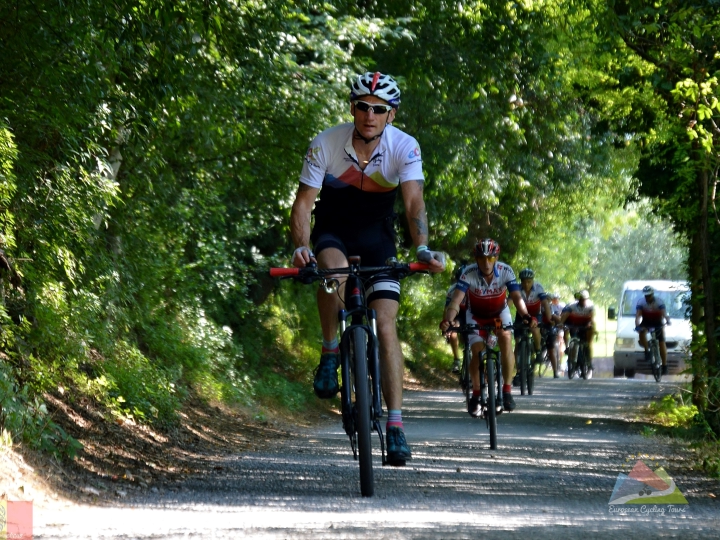
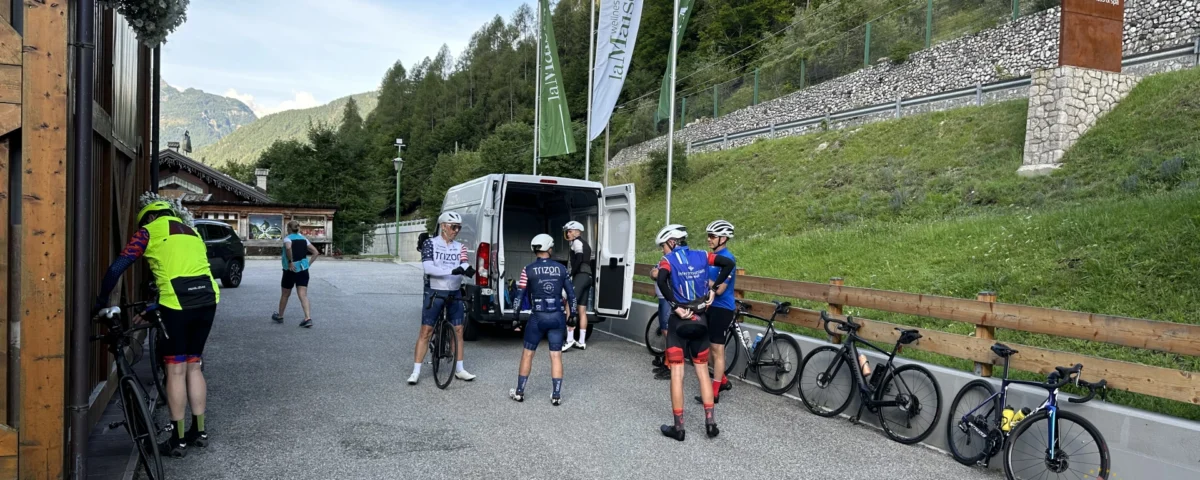
Guided: You ride with a professional lead guide and a group. A support vehicle follows the riders. Logistics, mechanics, and navigation are 100% managed for you.
Supported: Similar to guided, but often offers more flexibility. You have the safety net of a support vehicle (sag wagon) and mechanical assistance, but you may not always have a guide riding on your shoulder. This is the core of what we provide—the pro experience without the contract.
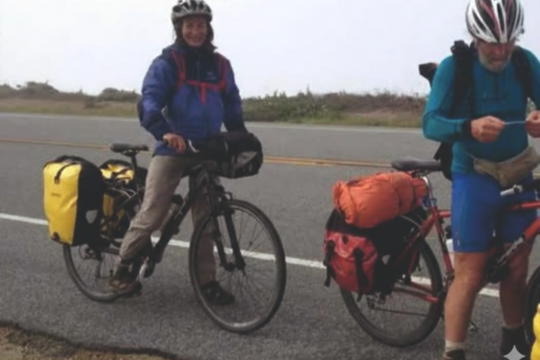
Self-Guided: You are given a route (maps or GPX files) and hotels are booked, but you ride alone. There is no support vehicle behind you. If you have a mechanical issue or get lost, you resolve it yourself.
Unsupported: Bikepacking or touring entirely on your own. You carry your own luggage, book your own accommodation, and plan your own route.
Who guided cycling holidays are best for
More views, less map reading.
Guided and supported tours are designed for cyclists who want to focus entirely on the ride. By removing the logistical burden, you unlock a higher quality of cycling.
These holidays are the perfect choice for:
International Travellers: When flying into Europe from the US, UK, or Asia, bringing tools, pumps, and spare parts is a hassle. A supported tour provides all mechanical backup.
First-Time Cycling Holiday Guests: If you have never ridden back-to-back days in high mountains, having a guide ensures you pace yourself correctly and finish the week strong.
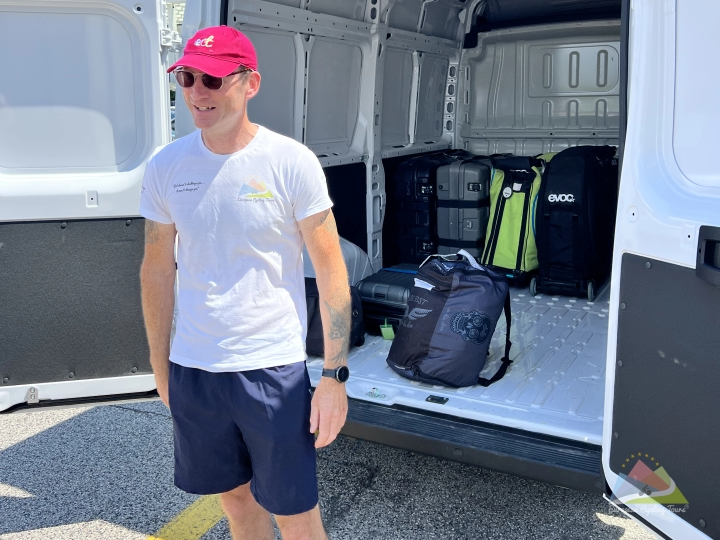
Riders Wanting Logistics Handled: You simply put your bag in the van in the morning and find it in your hotel room in the evening. Ride light. We’ve got the heavy lifting.
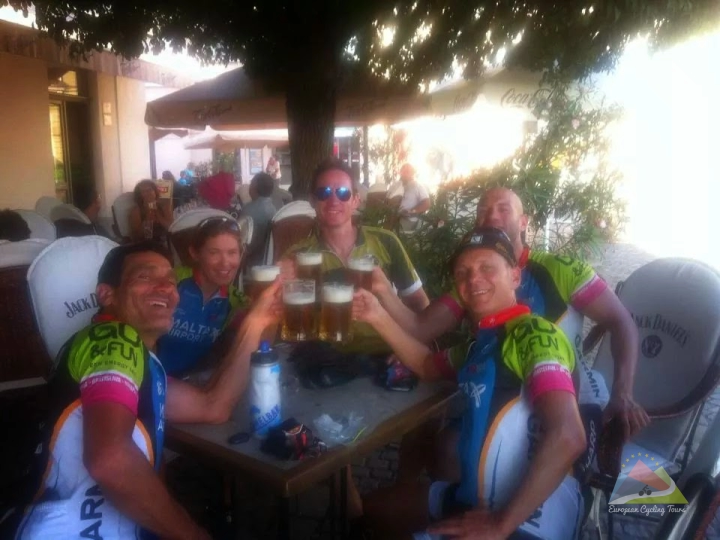
Social & Group-Focused Cyclists: Sharing the suffering on a climb and the celebration at dinner is half the fun. Guided groups create instant camaraderie.
➡ Explore our full range of Europe Cycling Holidays
Who self-guided cycling holidays suit
Your ride, your rules.
We believe in being honest about who suits which style. While we specialise in supported tours, we know that self-guided works for a specific type of rider.
Self-guided might be the right path if you are:
Highly Independent: You prefer solitude and dislike waiting for a group or sticking to a set departure time.
Navigationally Confident: You are proficient with GPS devices and can re-route on the fly if a road is closed or a turn is missed.
Language Comfortable: You are comfortable communicating in the local language (Italian, French, Spanish) if you run into trouble in a remote village.
Guided vs Self-Guided: Key Comparisons
Freedom vs. Focus: What’s your riding style?
| Feature | Guided / Supported Tour | Self-Guided Tour |
| Navigation | 100% managed. Follow the wheel or the van. | Self-navigation via GPS/Maps. |
| Support Vehicle | Always nearby for water, food, and rest. | None. You are on your own. |
| Luggage Transfer | Daily transfer hotel-to-hotel. | Usually included, but varies by operator. |
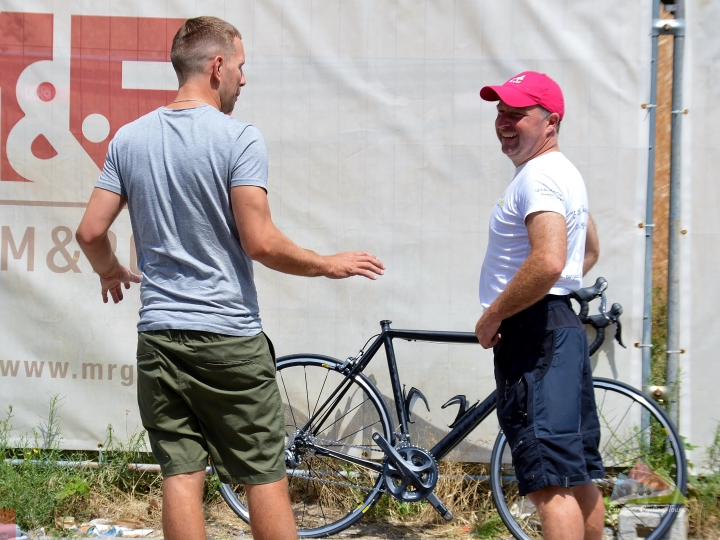
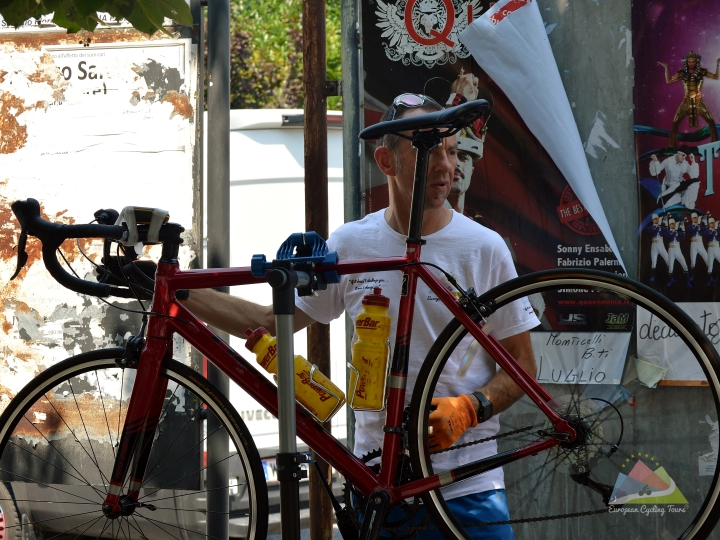
| Mechanical Backup | Professional mechanic & spare bike available. | Fix it yourself or find a local shop. |
| Route Knowledge | Local insights, hidden gems, and safety warnings. | Limited to what is on the map. |
| Social Experience | Group dinners, shared motivation. | Solitary or limited to your own party. |
Why guided cycling holidays work better in Europe
Europe is vast. Don’t go it alone.
While self-guided trips can work well on simple, flat rail-trails, the complex terrain of Europe’s premier cycling destinations makes a supported environment far superior.
Mountain Regions (Alps, Dolomites, Pyrenees)
High-altitude cycling is unpredictable. Weather can change in minutes at 2,000 metres. On a supported tour, if a storm rolls in or your legs give up on the Passo dello Stelvio, the van is there. On a self-guided trip, you are stuck on the mountain.
Multi-Country Routes
Crossing borders (e.g., France to Italy) involves changing languages, road laws, and sometimes signage styles. Our guides bridge these gaps seamlessly, ensuring you never feel out of place.
Language & Logistics
In rural Spain or the depths of the French Alps, English is not widely spoken. Ordering a spare derailleur hanger or explaining a medical issue to a local pharmacist can be impossible without a fluent guide.
Road Closures & Local Events
Europe is famous for summer roadworks and village festivals that close roads. A static GPX file won’t tell you the road ahead is closed; a local guide already knows the detour.
➡ Discover: Spain Cycling Holidays ➡ Discover: Italy Cycling Holidays ➡ Discover: UK Cycling Holidays ➡ Discover: France Cycling Holidays
Country Examples: Why Support Matters Where You Ride
Conquer the Cols, leave the logistics to us.
Italy
Italy offers some of the world’s most beautiful but chaotic riding. Traffic rules can be “flexible,” and road surfaces vary wildly. A guide acts as a safety buffer in traffic and knows exactly which café serves the best espresso.
France
From the Alps to Provence, France is diverse. The sheer scale of the climbs here means having a support van to offload jackets or grab a fresh bottle is a game-changer for your energy levels.
Spain
Heat is the enemy here. Riding in remote regions like Andalusia or Mallorca requires careful hydration management. A supported tour ensures you have unlimited water and electrolytes without carrying 3kg on your back.
United Kingdom
The UK has arguably the best lane network in the world, but it is a maze. It is incredibly easy to lose hours making wrong turns on narrow lanes. Our local knowledge keeps you on the best tarmac, avoiding the farm tracks.
Final: How to choose the right cycling holiday
Two ways to travel. One goal.
If you are still undecided, ask yourself these three questions:
Do I want to fix a puncture in the rain, or have someone else do it?
Do I want to study a map, or look at the scenery?
Do I want to ride with the confidence of professional backup?
If you answered yes to the latter, a supported cycling holiday is the right choice. Don’t let logistics kill the vibe.
Explore guided cycling holidays by country
View our upcoming tour dates
Contact our team for advice
Answers to some Frequently Asked Questions on guided cycling holidays
Q1: What is the main difference between guided and self-guided cycling? A: Guided tours include a professional guide and vehicle support. Self-guided tours provide maps and hotels but require you to navigate and ride independently.
Q2: Is a guided cycling holiday worth the extra cost? A: Yes. The price covers logistics, mechanics, support vehicles, and local expertise, ensuring a stress-free experience where you only focus on riding.
Q3: Can I join a guided cycling tour as a solo traveller? A: Absolutely. Guided tours are ideal for solo riders, offering instant camaraderie, safe group riding, and shared dinners with like-minded cyclists.
Q4: Do I need to be a pro cyclist for a guided tour? A: No. Tours are graded by difficulty. A “supported” environment actually helps you finish harder rides by carrying your gear and offering rest in the van.
Q5: What does “supported” mean in a cycling holiday? A: “Supported” means you have a vehicle (sag wagon) carrying luggage and offering mechanical aid, even if a guide isn’t cycling right next to you.
Q6: Are self-guided cycling tours safe in remote areas? A: They carry more risk. Without a guide, you must handle your own mechanicals, injuries, and language barriers. Guided tours offer immediate backup.
Q7: Do I need to bring my own bike for a guided tour? A: Rarely. Most operators provide high-end rental bikes (carbon road or e-bikes) professionally fitted to you, eliminating the hassle of flying with a bike box.
 "True mechanical and logistical peace of mind. 🛠️ Our support vehicles are never more than a few minutes away, ensuring you never have to carry a pannier or worry about a puncture on the high mountain passes."