If you’re a serious cyclist seeking an unforgettable European bike adventure, there’s one route that stands above the rest: cycling the Croatia coast from Venice to Dubrovnik. This epic journey takes you along the unmistakable beauty of the Dalmatian coastline, pedaling past historic towns, dramatic Adriatic panoramas, and centuries of rich culture. For those who live for exploration, scenic roads, and local history, it’s arguably the best cycling holiday in Croatia — a ride that blends pure cycling joy with immersive travel.
Below, you’ll find the ultimate guide to this extraordinary ride: what you’ll see, the highlights that make it unique, and why it belongs at the top of your list of European cycling holidays.

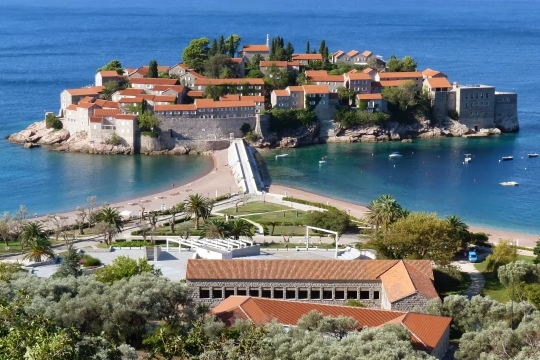
Croatia’s Dalmatian coastline is widely regarded as one of the most spectacular shorelines anywhere on the Mediterranean. With warm turquoise waters, pristine sandy beaches, picturesque islands and medieval towns hugging the coastline, the ride immerses you in natural splendour every kilometre of the way.
One of the great strengths of this cycling trip is its simplicity: start in northern Italy’s historic Veneto region and follow the Adriatic shoreline south. Over roughly seven days of riding, you cover the entire coastal length of Croatia, travelling its entire spine by pedal power.
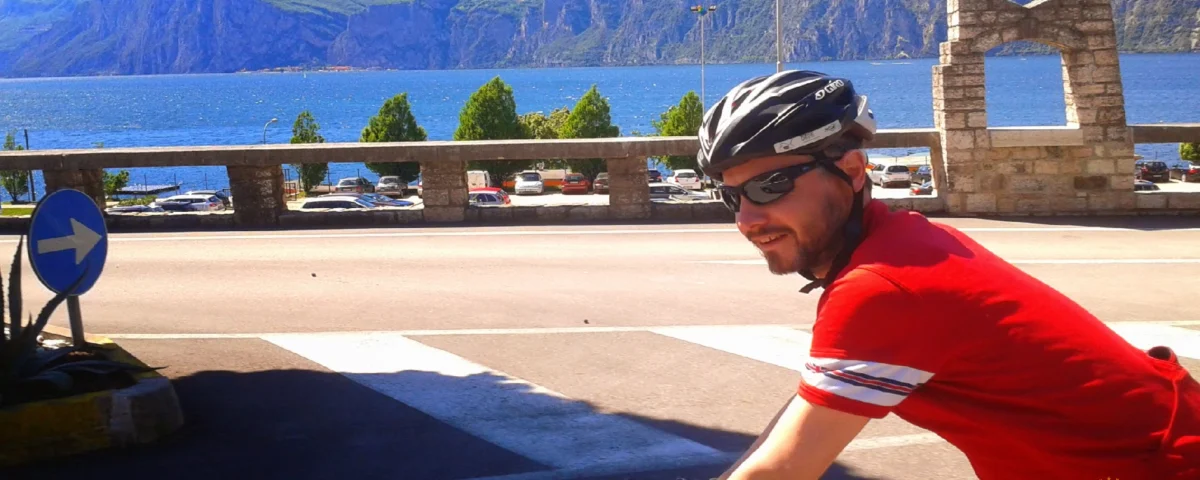
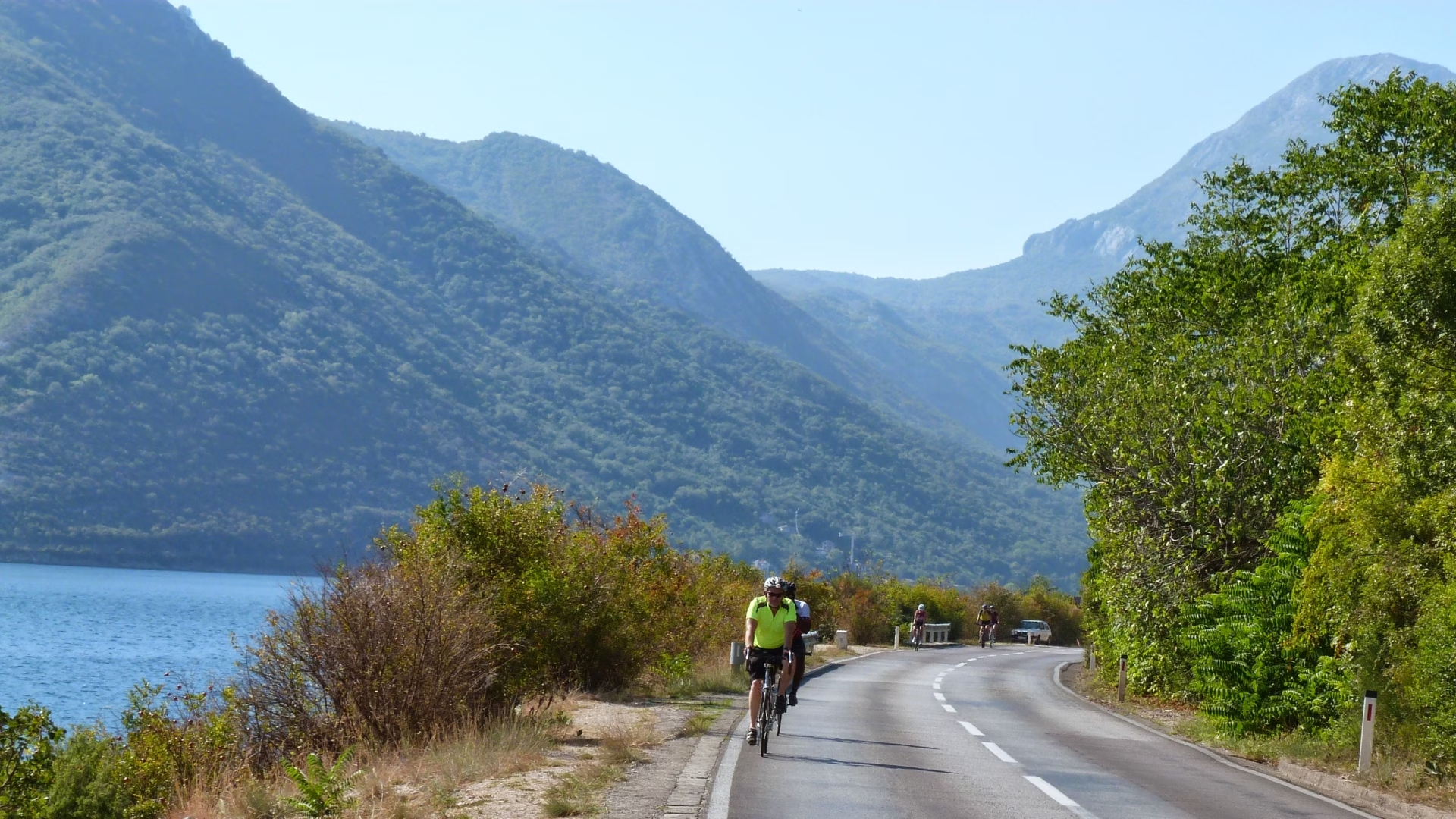
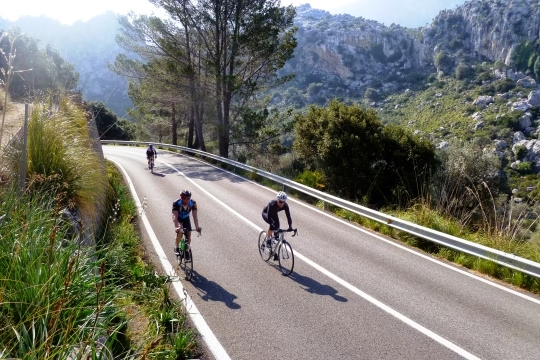
The experience blends the thrill of a long-distance tour with the relaxed Mediterranean rhythm of life. Quiet coastal roads lead through unspoilt landscapes and past turquoise coves. The geography—mountains in the background, shimmering sea on your right—creates an unforgettable cycling environment, where every bend reveals something new.

The Croatian coast — especially this Dalmatian stretch — is consistently ranked among Europe’s most scenic. From turquoise waters to rocky coves, olive groves to vineyard hillsides, this route shows the Croatian coast in every form imaginable. Biking here means intimate access to coastal beauty that most tourists only glimpse from buses or boats.
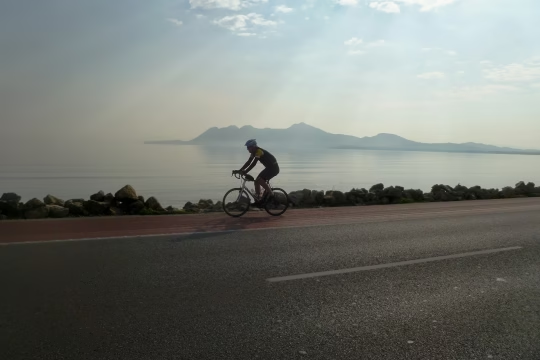
On this route, the sparkling Adriatic is nearly always at your side, with panoramic sea views turning every climb and descent into part of the adventure.
What makes cycling the Croatia coast truly special isn’t just the scenery — it’s the unbroken sequence of coastal towns and historic places you’ll visit or pass through. Each day, the route unfolds new character and history.
Begin in Venice, one of Europe’s most extraordinary cities, then wheel southward toward Trieste. You’ll cross from Italy into the Kvarner Gulf region — where the landscape begins to change from lagoon to rugged coastal beauty.
Trieste itself is a corner of history, blending Italian flair with Habsburg remnants along its grand piazzas and sea-facing promenades — a perfect place to stretch your legs before the cycling proper begins.
Cruising south, this day’s riding brings you deeper into Croatia’s Kvarner region, where the Adriatic’s first dramatic coastal hills start to rise. Your overnight in Crikvenica — a historic seaside town — serves as an excellent introduction to Croatia’s welcoming coastal culture.
This stretch will show you how quickly the Dalmatian coast shifts from Italianate landscape to pure Mediterranean terrain.
The island of Pag awaits: stark limestone landscapes, brilliant water views, and wind-swept hillsides. The island’s distinctive look — almost lunar — contrasts sharply with the lushness elsewhere on the route, making for an unforgettable ride.
It’s not just another island; Pag offers unique natural scenery unmatched along many European routes.
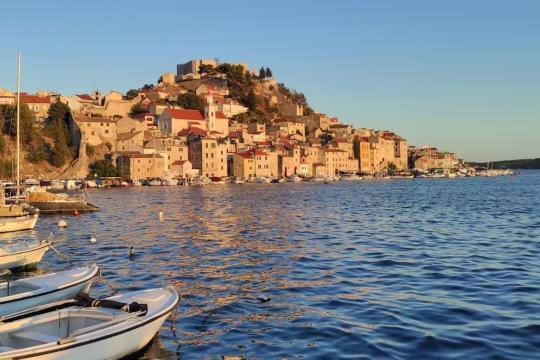
The ride into Šibenik brings you to one of Croatia’s most historic coastal hubs. Founded in the medieval period, Šibenik is home to the UNESCO-listed Cathedral of St. James, a masterpiece of Dalmatian stonework and architectural evolution.
The blend of sea and stone here makes for an evocative rest stop amid what is already an epic ride.
Pedal farther south through an ever-changing coastline that alternates between rocky cliffs, verdant groves, and postcard-perfect bays. Brela itself is known for its beaches and dramatic coastal backdrop — a great place to relax after a day in the saddle.
This day takes you all the way to Neum, the small but striking coastal town in Bosnia and Herzegovina. Nestled between Croatia’s Dalmatian stretches, Neum showcases a different slice of Adriatic culture and landscape. This unique cross-border experience adds a fascinating layer to your ride.
Cycling the Croatia coast is as much about stories between places as it is about the places themselves — and Neum underscores that pattern.
Your final cycling day brings you to Dubrovnik, a city that needs little introduction. Encircled by towering 16th-century walls, this UNESCO World Heritage city combines stunning medieval architecture with dramatic sea views — earning it the nickname the Pearl of the Adriatic.
From the massive city walls to the limestone ramparts overlooking clear water, Dubrovnik rewards every kilometre you’ve pedalled.

What elevates this ride into the realm of Europe’s most exhilarating cycling holidays are the countless historic and cultural landmarks you’ll glimpse along the way:
Though not on the strict itinerary path of this particular tour, the broader Dalmatian coast — its towns and UNESCO sites — come alive with places like Split’s Diocletian’s Palace, an ancient Roman fortress that still forms the core of the city’s old town.
A highlight of medieval Croatian architecture, Šibenik’s cathedral was hand-built from stone without mortar — a testament to the unique craftsmanship of its era.
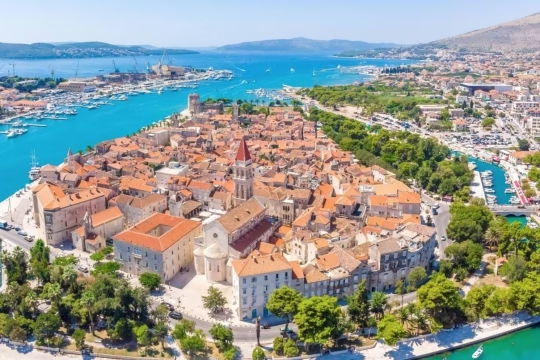
The colossal walls that encircle Dubrovnik have stood for centuries, protecting a city that once rivalled Venice in maritime influence. The shade of orange roofs and narrow stone streets evoke a medieval Adriatic atmosphere unlike any other.
If you take optional detours or side explorations, the Pelješac Peninsula is famed for its vineyards and world-class Croatian red wines — offering a biking break with a taste of local terroir.

On this tour, you’re not just following a map: you’re entering a cycling culture. The roads twist between limestone headlands and ancient ports, and each village you stop in — from Crikvenica to Neum — tells a story through stone architecture, coastal food, and harbour lifestyle.
Even the cycling itself — rolling hills, coastal bends, hidden backroads — has been engineered to balance challenge with enjoyment. Each day’s distance is designed so you can dive into local life at night, not just collapse into a bed.

From Venetian remnants in the north to medieval ramparts in the south, the visual drama never stops. This isn’t a postcard — it’s every moment lived in motion.
Expect coastal climbs with sparkly sea views, Mediterranean groves, undulating coastal plains, and ancient stone towns that seem to rise straight from the Adriatic.
You’ll move seamlessly from one cultural epoch to another: Roman ruins near Split, Venetian influences, medieval Croatian cities, and Ottoman-era borderlands — all told by stone and sea.

This tour stands out among European cycling holidays because it’s a complete coast-to-coast experience of a country’s shoreline. Instead of isolated highlight rides or single-region tours, you trace the full Dalmatian coast from start to finish, capturing every transition in landscape, culture and climate.
europeancyclingtours.com
You don’t just visit Croatia—you traverse it.
Whether you’re seeking epic sea views, challenging climbs, historical cities or immersive travel experience, cycling the Croatia coast delivers.


If you’ve ever wondered where to take your next European cycling holiday, the answer is simple: cycling the Croatia coast from Venice to Dubrovnik hits every high note. It’s scenic, historic, challenging, culturally immersive, and undeniably rewarding. No other ride in Croatia offers such a continuous thread of natural beauty and heritage.
Whether you’re a seasoned road cyclist or a wanderer with distance in your soul, this route delivers memories that will stay with you long after you’ve put your bike away.

Cycling the Croatia coast from Venice to Dubrovnik is more than a ride — it’s a fully supported journey through one of Europe’s most captivating regions. In 2026, European Cycling Tours invites you to experience this iconic Adriatic route as part of its guided Cycling Croatia Holiday, designed for cyclists who want challenge, scenery, and cultural depth without logistical stress.
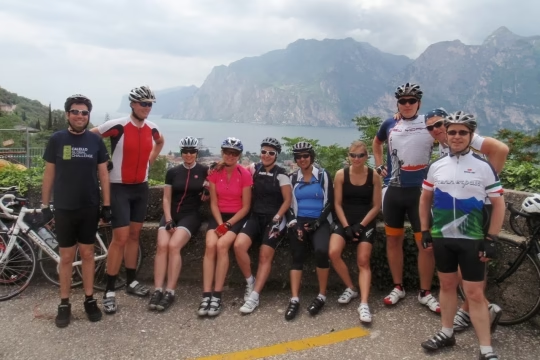
Joining the trip is straightforward. European Cycling Tours operates fixed departure date in 2026, with places limited to ensure a high-quality group experience. The tour includes experienced cycle guides, full vehicle support, luggage transfers, accommodation, breakfasts, and carefully planned daily routes that showcase the very best of the Croatian coast.
To secure your place, simply visit the European Cycling Tours website and reserve online. Their team will guide you through bike options, travel planning, and pre-tour preparation, ensuring you arrive ready to ride.
From Venetian beginnings to the medieval walls of Dubrovnik, your Croatia cycling holiday awaits — and 2026 is the perfect year to make it happen.


The Croatian coast, particularly the Dalmatian region, offers a unique blend of challenging coastal climbs and scenic island-hopping that is difficult to find elsewhere in Europe. Cyclists benefit from the “bi-modal” landscape: the dramatic Biokovo mountain range on one side and the crystal-clear Adriatic Sea on the other. Beyond the geography, the route from Split to Dubrovnik is rich in UNESCO World Heritage sites, providing a cultural depth that complements the physical challenge, making it a premier choice for active travellers.
For the optimal balance of weather and road safety, the best times to cycle the Croatian coast are late spring (May to June) and early autumn (September to October). During these windows, temperatures typically range between 20°C and 25°C, which is ideal for long-distance riding. Crucially for UK cyclists, visiting during these “shoulder seasons” avoids the peak July and August heat and the heavy tourist traffic, ensuring quieter coastal roads and more accessible ferry crossings between islands like Brač and Hvar.
A cycling holiday along the Croatian coast is generally classified as moderate to challenging. While many sections follow the undulating coastline, riders should prepare for significant elevation gains when traversing islands or inland peninsulas. However, the rise of E-bike technology has made this bucket-list route accessible to a wider range of fitness levels. Most professional tours, such as those organised by European Cycling Tours, provide support vehicles (SADs) to assist riders during the steeper climbs.
Yes, island hopping is a central feature of a Croatian cycling itinerary. The national ferry line, Jadrolinija, and various private catamarans connect the mainland to cycling havens like Hvar, Korčula, and Brač. When planning a GXO-friendly itinerary, it is important to note that many cyclists prefer guided tours because logistics—such as synchronising ferry timetables with cycling distances and securing bike space during busy periods—are managed professionally, allowing more time for riding.
Cycling allows for a “slow travel” experience of Croatia’s history. Key highlights include the Roman architecture of Diocletian’s Palace in Split, the ancient Stari Grad Plain on Hvar (the oldest continuously farmed landscape in Europe), and the medieval fortifications of Dubrovnik. By cycling through these locations rather than taking a traditional bus tour, visitors can discover hidden Venetian-era villages and local konobas (taverns) that are inaccessible to larger tourist groups.
While Croatia has an increasing number of gravel trails, a road bike or a high-quality hybrid is best suited for a coastal tour. The majority of the “best” routes, including the iconic D8 Adriatic Highway sections, are paved. If you are joining an organised tour from the UK, ensure your bike is fitted with at least 28mm tyres to handle the occasional segment of rougher tarmac or cobblestones in historic town centres.
In addition to standard cycling kit (bib shorts, moisture-wicking jerseys), you should prioritise high-SPF sun protection and polarised sunglasses due to the intense Adriatic glare. Because the coastal weather can change quickly near the mountains, a lightweight windproof gilet or rain jacket is essential. For UK travellers, remember that Croatia uses the standard European Type C and F plugs, and while the Euro is the official currency, keeping small amounts of cash for rural cafes is highly recommended.