Expert Guide: How to Fly to Europe with a Road Bike Safely


- Flying with Your Road Bike to Europe: Traveling to Europe with your bike requires careful preparation, the right packing, and understanding airline policies to ensure a stress-free experience.
- Choosing Between Bringing Your Bike or Renting: Bringing your own bike guarantees a perfect fit for demanding climbs, while renting can remove transit stress but may be costly for longer trips.
- Bike Packaging Options for Air Travel: Options include hard cases for maximum protection, semi-rigid cases for a balance of protection and portability, soft bags for convenience, and cardboard boxes as budget options.
- Airline Policies and Tips for Flying with a Bike: Policies vary widely; some airlines include bikes in standard allowance, while others charge fees. Precise planning, early booking, and tracking tools are recommended.
- Expert Packing Tips for Your Bike: Proper cleaning, disassembly, padding, and a ‘shake test’ ensure your bike arrives intact, reducing transit damage.
If you’re planning a cycling holiday in Europe, one of the first questions you ask yourself is more often than not…
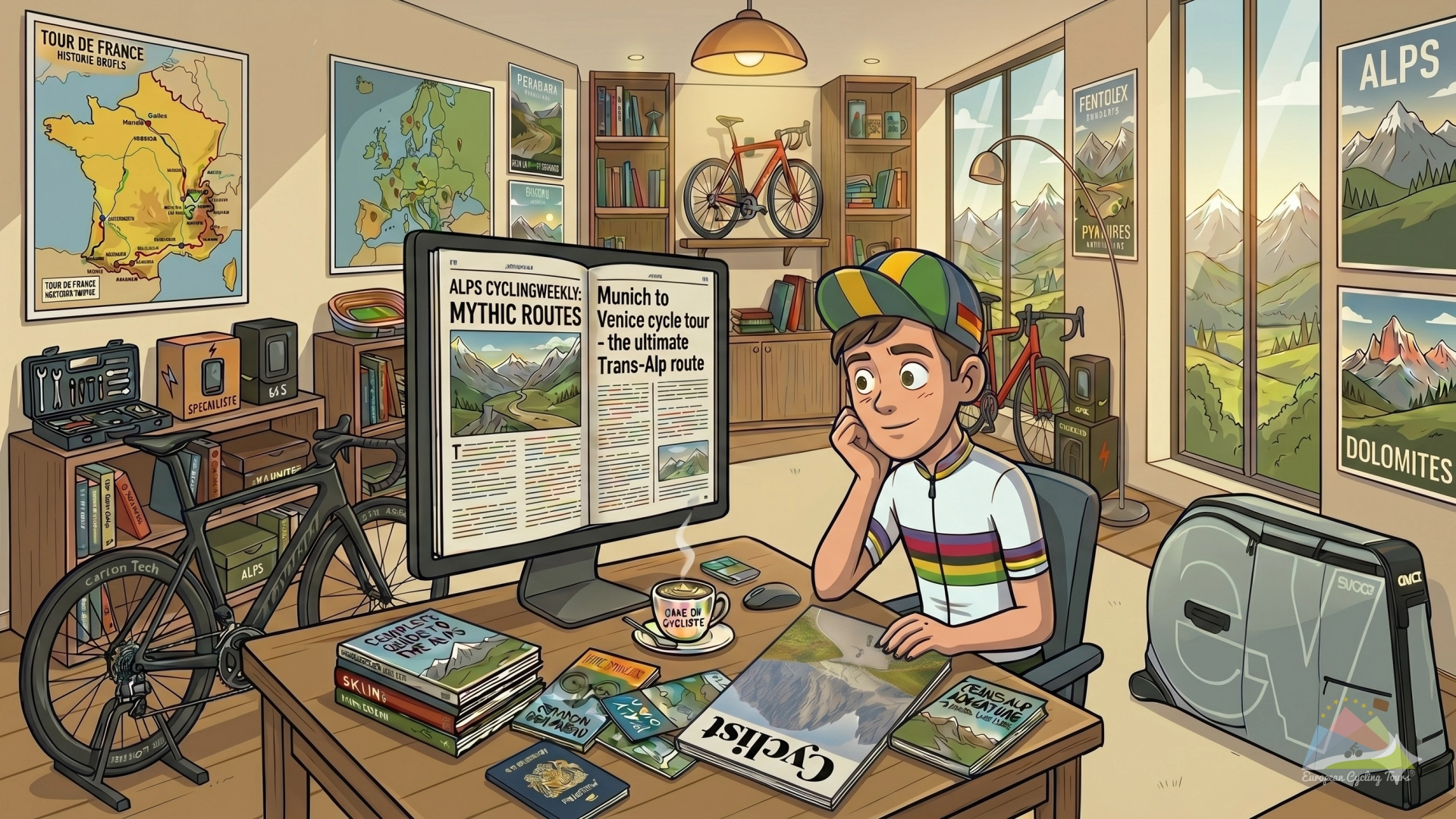
Should I take my own bike to a cycling holiday in Europe?
It’s the question on every cycle tourer’s lips — whether you’re preparing for the Alps, exploring Italy, riding the rolling lanes of the UK, or cruising the smooth cyclepaths of of the great river valley’s.
Taking Your Road Bike to Europe: The Definitive Guide to Airlines, Packing, and Logistics
There is an undeniable, heart-pounding thrill that comes with clipping into your pedals on foreign tarmac. The crisp alpine air of the French Alps, the dramatic, jagged limestone peaks of the Italian Dolomites, or the sun-baked, serpentine coastal roads of Majorca call to every dedicated road cyclist. But standing between you and that dream ride is a formidable logistical hurdle: the airport.
For many riders, the thought of handing over a carbon-fibre pride-and-joy to the unpredictable mercy of airline baggage handlers is enough to induce cold sweats.
The fear of arriving in a cycling paradise only to unzip your bike bag and find a cracked frame or a bent derailleur is a legitimate anxiety. However, flying to Europe with your road bike doesn’t have to be a nightmare of hidden fees and transit damage. With the right preparation, the correct bike box, a firm understanding of airline policies, and a few insider tricks of the trade, taking your own bike on a plane can be a seamless, stress-free experience.
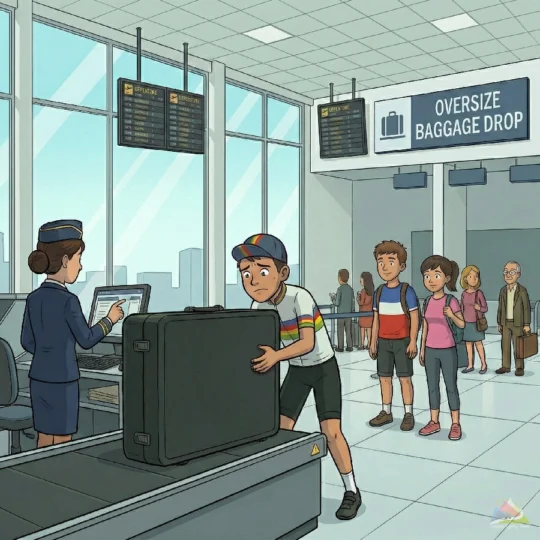
“Navigate major UK and European airport hubs with confidence. Our road cycling travel guide focuses on removing the stress of logistics, ensuring the relief of a successful check-in leads to an epic cycling adventure.”
If you are a cyclist traveling from Australia, Canada, USA, South Africa, New Zealand, Dubai…
This comprehensive guide is your gold-standard blueprint for flying to Europe with your road bike.
We will demystify airline baggage policies, settle the debate on the best bike boxes, walk you through packing your bike like a professional mechanic, and ensure your only focus upon arrival is conquering the climbs.
The Great Debate – Bringing Your Bike vs. Renting
Before you invest in a bike box or book oversize baggage, you must answer the ultimate question: “Should I fly with my own bike or rent one at the destination?”
If you are joining us for one of our epic Alps Cycling Holidays Webpage or tackling the Mont Ventoux Cinglés Challenge Webpage, having a bike that fits your biomechanics perfectly is critical. Hours in the saddle on steep European gradients amplify minor fit discrepancies, which can quickly turn into knee or lower back pain. When you bring your own road bike, you guarantee comfort, familiarity, and the exact gearing you are used to.
On the other hand, renting a high-end carbon bike from a reputable European dealer has never been easier, especially in cycling meccas like Girona or Majorca. It removes the stress of transit and the cost of airline fees. However, rental costs can quickly surpass airline baggage fees on trips longer than four or five days.
If you do decide to bring your own machine, make sure it is optimized for the terrain you will be facing. For an in-depth look at preparing your gearing and setup, check out our guide on The Ultimate Guide to Choosing the Best Bike for a Cycling Holiday in Europe. If you are bringing your bike, the logistics start right here.
The Armour – Choosing Between Bike Boxes, Bags, and Cardboard
Your first line of defence against the rigours of international air travel is your bike box. The market is flooded with options, ranging from inexpensive cardboard to premium, military-grade hard cases. Choosing the right one is a balancing act between ultimate protection, your airline weight allowance, and how easily you can physically maneuver it through a busy terminal.
1. Hard Bike Boxes (The Gold Standard)
For ultimate peace of mind, a rigid hard case is unmatched. Constructed from tough ABS plastic or polycarbonate, these boxes are designed to withstand heavy impacts, being stacked beneath other luggage, and the occasional drop by baggage handlers.
Pros: Maximum protection for carbon frames; internal strapping systems and anti-crush poles prevent lateral compression; lockable for security.
Cons: Bulky to store at home and difficult to fit into standard rental cars or airport transfer vehicles. They are also expensive (upwards of £400 – £800).
Ease of Handling: Hard cases are the heaviest option, typically weighing between 8kg and 10kg empty, which eats significantly into your airline weight allowance. However, they almost always feature four multi-directional caster wheels and moulded plastic handles. This makes them effortless to glide smoothly across polished airport concourses, but they can be incredibly awkward and heavy to carry up stairs or drag across cobbled European streets.
Top Brands: BikeBoxAlan, Thule RoundTrip, Scicon Aerotech.
2. Semi-Rigid Bike Boxes (The Hybrid Solution)
Semi-rigid boxes hit the sweet spot between security and practicality. They typically feature a tough, moulded polymer or rigid plastic base combined with high-density EVA foam or impact-resistant fabric side panels.
Pros: Offers significantly better crush and impact protection than a soft bag, while remaining lighter and slightly more packable than a full hard case.
Cons: Still requires a fair amount of dismantling (wheels, pedals, handlebars), and the side panels cannot withstand the extreme pinpoint impacts that a hard ABS shell can.
Ease of Handling: Weighing in at roughly 6kg to 9kg, semi-rigid cases offer a great balance. They usually feature at least two high-quality, fixed inline skate wheels at the rear and a sturdy front pull handle, you pull them behind you like a traditional travel suitcase. However look hard at the more top-end market of these semi-rigid cases and you will find options with multi-directional caster wheels in each corner! While you lose the 360-degree glide of a hard case, the reduced weight and multiple fabric grab handles make them much easier to lift onto airport trolleys or into the back of a support van.
Top Brands: Scicon, Evoc Road Bike Bag Pro, Topeak Pakgo X.
3. Soft Bike Bags (The Budget Compromise)
Soft bags have evolved significantly from the unpadded sacks of the past. The best options now feature rigid alloy internal frames to securely mount your fork and rear dropouts, along with heavy-duty padding around vulnerable areas.
Pros: Easier to fold down and store under a bed in your European hotel room or in a support vehicle. They are much easier to squeeze into the back of an estate car or taxi at the airport.
Cons: Less protection against lateral crushing or sharp, heavy objects falling on top of them in the cargo hold. Requires meticulous packing to ensure the frame isn’t compromised.
Ease of Handling: Soft bags are beautifully lightweight, usually weighing between 6kg and 8kg, maximizing the amount of cycling kit you can pack inside without breaching airline limits. They typically utilize two rear wheels and come equipped with padded shoulder straps and multiple grab handles. They are the easiest permanent option to lift and maneuver into tight spaces, though dragging them long distances can occasionally be tiring if the bag sags.
Top Brands: Scicon Aerocomfort, Orucase Ninja.
4. Cardboard Bike Boxes (Single Trip Option)
If you are on a tight budget or doing a point-to-point tour where you cannot transport a heavy plastic box (e.g., a massive bikepacking trip), a cardboard bike box sourced from your local bike shop is a viable, albeit risky, option.
Pros: Free or very cheap; disposable at your destination so you don’t have to store it.
Cons: Highly vulnerable to rain (if left on a wet tarmac, the structural integrity dissolves instantly) and offers minimal crush protection.
Ease of Handling: This is where cardboard fails spectacularly. While exceptionally light (usually around 3kg to 5kg empty), they have zero wheels. You are entirely reliant on cut-out cardboard hand-holds that frequently tear under the weight of a packed bike. If you choose cardboard, you must secure an airport luggage trolley the exact second you step out of your vehicle, as carrying them by hand through a massive terminal is an exhausting way to start your trip.
Expert Tip: If you only travel to Europe once a year for a Majorca Cycling Holiday webpage, consider hiring a hard box. Many local bike shops or specialist box rental companies offer premium hard cases for a fraction of the purchase price.
Navigating major European airport hubs with ease. This logistics-focused road cycling style ensures your equipment remains pristine across varied transit terrains, providing total peace of mind for every touring cyclist.
From departures all over the world to major European arrivals, navigating airport logistics is a core part of the international road cycling style. This ‘semi-rigid’ style of secure packing provides the peace of mind needed to enjoy the journey and the arrival.
From worldwide departures to European arrival hubs, navigating transit with a road bike requires specialized gear. This ‘soft bag’ style of bicycle travel provides peace of mind at a reasonable budget.
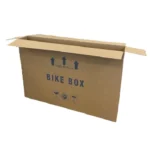
Navigating European airport logistics requires durable equipment protection for diverse transit terrain. This budget logistical style will see you happily for the return trip.
Airline Policies for Flying to Europe
No two airlines treat bicycles the same. Some view them as standard sporting equipment included in your allowance, while others see them as an opportunity to levy hefty oversize baggage fees. Always book your bike onto the flight at the exact moment you book your passenger ticket, as airlines have a strict limit on the number of large items they can load into the cargo hold.
✈ British Airways (BA)
BA is generally very cyclist-friendly. They allow you to bring a bike box as part of your checked baggage allowance (if you have purchased a fare that includes a checked bag), provided it weighs under 23kg. If your box is over 23kg, you will pay a heavy bag charge, but the absolute maximum is 32kg. The dimensions must not exceed 190 x 95 x 65cm.
✈ easyJet
A popular choice for short-haul flights to the Alps, Spain, and Italy. easyJet classifies a bicycle as “Large Sports Equipment.” You must pay a dedicated fee for this (usually around £45-£60 per flight, depending on the route and when you book). This gives you a generous weight allowance of 32kg for the bike box alone, allowing you to easily pack your helmet, track pump, and cycling kit in the box.
✈ Ryanair
Another giant of European travel, Ryanair requires you to book a specific “Bike Equipment” allowance. The fee is usually €60/£60 per one-way flight if booked online, or slightly more at the airport. The weight limit is strictly 30kg. Ryanair specifies that the bike must be contained in a protective box or bag.
✈ Air France / KLM
Both airlines require you to declare your bike ahead of time by calling customer service or booking online. Fees vary depending on your departure point and destination within Europe, typically ranging from €40 to €125 per leg. The maximum weight is 23kg unless you are flying in a premium cabin or possess elite frequent flyer status.
✈ International Carriers (Delta, American Airlines, United)
If you are flying trans-Atlantic (perhaps joining us for a bespoke tour after looking at our Guided vs Self-Guided Cycling Holidays webpage guide), US carriers have drastically improved their policies. Most major US airlines have dropped their exorbitant oversize fees for bikes, now treating a bike box as a standard checked bag, provided it remains under 50lbs (23kg).
NOTE: The airline industry is highly dynamic, and baggage policies regarding oversized sports equipment are subject to frequent revision. The fees, weight allowances, and booking procedures detailed in this guide are accurate at the time of writing but can be altered by carriers without prior notice from year to year. Always meticulously verify the specific terms and conditions directly with your chosen airline immediately prior to booking your flights.
Packing Your Road Bike Like a Pro
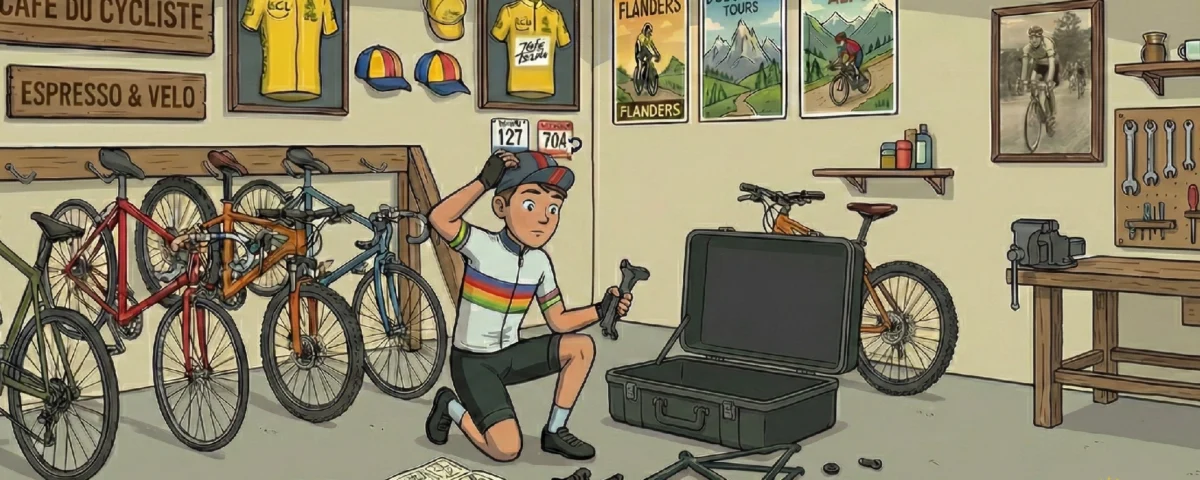
The secret to arriving in Europe with a functional bicycle lies entirely in how you pack it. Baggage handlers work under intense time pressure, meaning your box will be tipped, slid, and occasionally dropped. Here is a step-by-step masterclass on packing your bike:
1️⃣ Clean Your Bike: Never pack a dirty bike. A clean bike is easier to dismantle, and dirt or grit trapped between the frame and padding will act like sandpaper, destroying your paint job during transit vibrations.
2️⃣ Remove the Pedals: Pedals can easily punch holes through the side of soft bags or damage other bikes. Remove them, put them in a small ziplock bag, and tape them securely to the inside of your box or stash them in your kit bag. Remember: the left pedal is reverse-threaded.
3️⃣ Remove the Rear Derailleur: This is the most common casualty of air travel. A bent derailleur hanger will ruin the shifting for your entire trip. Shift into the largest cog, unbolt the rear derailleur from the hanger, wrap it tightly in bubble wrap, and zip-tie it safely inside the rear triangle of the frame so it cannot swing around.
4️⃣ Handlebars and Headset: Depending on your box, you will need to either unbolt the faceplate of the stem to remove the handlebars or remove the stem from the steerer tube. If doing the latter, immediately screw the top cap back into the steerer tube so you don’t lose the headset bearings. Zip-tie the padded handlebars to the top tube or fork legs, ensuring no metal touches carbon.
5️⃣ Wheels and Tyre Pressure: Remove your wheels and take out the quick-release skewers or thru-axles (store them safely!). Place the wheels in the designated wheel bags or compartments. The Tyre Pressure Myth: You do not need to fully deflate your tyres. Aircraft cargo holds are pressurized. Fully deflating tubeless tyres can break the bead seal, causing a mess of sealant. Simply drop the pressure to around 40-50 PSI to allow for minor expansion.
6️⃣ Padding and Bracing: Insert plastic spacers (often free from local bike shops) into the front fork dropouts and the rear frame dropouts. This prevents the frame from snapping if the box is crushed laterally. Wrap all exposed carbon tubes in high-density foam or bubble wrap.
7️⃣ The ‘Shake Test’: Once everything is packed, close the box and give it a firm shake. You should hear absolutely nothing. If anything rattles, it will rub. Open it up and secure the loose item.
Airport Logistics – Departure and Arrival
At the Departure Airport
Arrive in good time for your check-in, at least 2.5 to 3 hours before your flight! You will first check in at the normal desk to weigh your bike box and receive your luggage tags. Because the box will not fit on the standard conveyor belt, you will be directed to the ‘Oversize Baggage’ or ‘Out of Gauge’ belt. Ensure your box is locked (TSA approved locks if required) and securely strapped.
Security Tracking
In recent years, the use of Bluetooth trackers like Apple ‘AirTags’ or Tile has revolutionized bike travel. Hide an AirTag deep inside your bike box (taped under the saddle or inside your tool keg). As you board the plane, you can open your phone and verify that your beloved bike has indeed made it into the cargo hold beneath you.
Arriving in Europe
When you land in destinations like Geneva, Palma, or Nice, your bike will almost never come out on the standard luggage carousel. Look for the dedicated oversize baggage door or lift. Inspect your box immediately. If there is visible, severe damage to the hard case, open it in front of airport staff and file a damage report before leaving the baggage hall.
Airport Transfers
This is where many independent trips fall apart. A standard European taxi will not fit a hard bike box. If you are travelling independently, you must pre-book a larger minivan transfer. Better yet, when you book an organized trip like our Italian Dolomites Tour webpage, seamless airport transfers with specialized support vehicles that easily accommodate bike boxes are fully integrated into the itinerary.

From major European aviation hubs to regional mountain gateways, mastering airport logistics is key for road cycling enthusiasts. This self-supported travel style offers the reward of riding your own familiar machine.
Let Us Handle the Heavy Lifting
Flying to Europe with your road bike does require meticulous planning, but the reward of conquering legendary European climbs on your own perfectly tuned machine is worth every ounce of effort. By investing in the right protection, understanding airline policies, and packing with care, you mitigate the risks and maximize the ride.
However, if navigating oversize baggage, negotiating with foreign taxi drivers, and plotting complex GPS routes feels like a distraction from the joy of riding, we are here to help. At European Cycling Tours, we specialize in luxury, fully managed cycling holidays where you are treated like a professional. From our expert ride leaders to our dedicated support vehicles and premium 4-star accommodations, we ensure that your only job is to turn the pedals and enjoy the spectacular scenery.
Are you ready for your next grand adventure? Stop dreaming and start riding. Explore our full calendar of fully guided and supported Cycling Holidays in Europe today, and let our experienced team turn your ultimate cycling ambitions into reality. See you on the road!

The Mediterranean coastline offers spectacular winding coastal roads and moderate sea-level gradients for complete pleasure focused road cycling. Transporting a bike safely will ensure a sense of pure thrill and excitement cycling on your own favorite bicycle.
Thank you for your time reading this, hope you found this article helpful.
See you out there… 

— Jason